
As India’s digital economy expands, enterprises are navigating a threat landscape that is more targeted, automated, and privacy-invasive than ever before. The rise of AI-driven attacks, hybrid work ecosystems, and stricter regulatory frameworks such as the Digital Personal Data Protection (DPDP) Act means cybersecurity can no longer focus only on perimeter defence.
Industry insights from global cybersecurity providers like Kaspersky and McAfee, alongside India-focused intelligence from Seqrite, highlight that modern cyber risks are increasingly intertwined with data protection and digital trust.
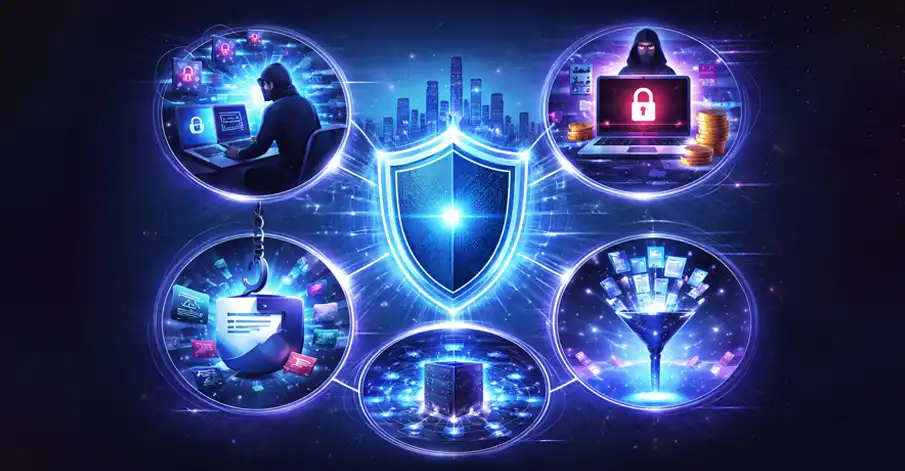
Here are five cyber threats Indian enterprises must prioritise in 2026:
1. AI-Driven Phishing and Social Engineering
Phishing campaigns have evolved beyond generic email scams. Attackers now use AI to craft hyper-personalised messages that mimic internal communication styles and business workflows. These campaigns often bypass traditional filters and exploit human trust rather than technical loopholes.
Research and advisories from Kaspersky indicate that phishing remains one of the most effective initial access methods globally, particularly when combined with credential harvesting tactics. For Indian enterprises, compromised credentials can quickly escalate into large-scale data exposure, directly impacting regulatory compliance under the DPDP Act.
2. Ransomware with Data Exfiltration
Ransomware is no longer limited to encrypting files. Modern variants steal sensitive data before locking systems, threatening public leaks if ransom demands are not met.
Threat intelligence insights referenced by McAfee show that ransomware groups are increasingly targeting critical business data and backups to maximise pressure. For enterprises handling personal and financial information, such breaches can trigger both operational disruption and regulatory scrutiny, making secure backup strategies and data governance essential.
3. Identity-Based Attacks and Credential Abuse
With enterprises adopting cloud-first strategies, identity has become the new perimeter. Attackers are focusing on password reuse, session hijacking, and privilege escalation to move laterally within networks.
Security findings highlighted by Kaspersky emphasise that weak authentication practices significantly increase breach probability. Strong identity and access management (IAM), multi-factor authentication (MFA), and least-privilege policies are not just best practices — they are critical safeguards to prevent unauthorized access to regulated personal data.
4. Data Privacy Breaches and Regulatory Risk
As DPDP enforcement strengthens, the consequences of mishandling personal data are becoming more tangible. Misconfigured cloud storage, unsecured APIs, and poor data classification practices can expose sensitive customer information without a traditional “attack” taking place.
Enterprise-focused solutions such as Seqrite Data Privacy are designed to help organisations map data flows, monitor consent mechanisms, and align operations with compliance requirements. Embedding privacy-by-design principles reduces both cyber risk and reputational fallout, reinforcing that cybersecurity and compliance must work together.
5. Brand Impersonation and Digital Risk Exposure
Cybercriminals are increasingly exploiting brand identity through fake domains, fraudulent apps, and social media impersonation campaigns. These attacks not only defraud customers but also erode trust in legitimate businesses.
Industry guidance from McAfee and Kaspersky consistently stresses the importance of proactive monitoring and digital hygiene practices to counter online impersonation and privacy misuse. For Indian enterprises, protecting digital identity is as critical as securing internal infrastructure.
McAfee, Seqrite & Kaspersky Team