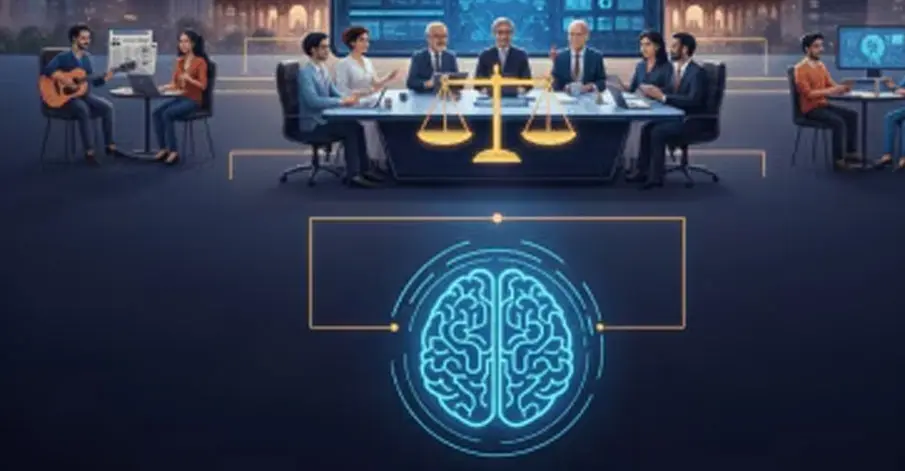
An Indian government panel has recommended a landmark rule that would require AI companies to pay content creators for using their work to train models — a move that could significantly reshape how global AI firms like OpenAI and Google operate in one of their largest user markets. The proposal, released Monday, pushes for a centralised royalty system, marking a major shift away from the “fair use” approach favored in jurisdictions such as the United States.
The panel, established in April, said AI companies should continue to have access to Indian content for training, but they must compensate creators through a central body that would collect and distribute royalty payments. This comes amid increasing global efforts to resolve copyright conflicts as AI models rely heavily on large-scale data scraped from the internet. While companies argue that such usage is legitimate “fair use,” the Indian recommendation challenges that stance directly.
Unlike the U.S., where AI firms maintain that training on publicly available content is permissible, India’s proposed framework more closely resembles a regulated licensing environment. The report states that “AI firms should be able to access Indian content for training but should pay royalties to a central body representing copyright holders.”
The panel also dismissed the opt-out system used in the European Union, which allows creators to withdraw their material from AI training datasets, calling it ineffective because it places the burden on creators to locate their work within massive AI corpora. Instead, the Indian approach allows creators to claim revenue from a collective fund if their content is used.
The recommendation comes as OpenAI faces legal pressure in India, including a copyright-related case filed by news agency ANI. OpenAI has denied any infringement, maintaining that its use of online material falls within fair use principles.
Industry pushback has already begun. Nasscom, which represents companies like Google and Microsoft, formally opposed the plan, warning that the mandatory fee amounts to a “tax or levy on innovation.” The Motion Picture Association — whose members include Netflix and Paramount — has also argued against altering India’s copyright laws, advocating instead for licensing-based solutions.
The proposal is now open for public and industry feedback for 30 days before a government review, setting the stage for a potentially transformative shift in India’s AI governance landscape.