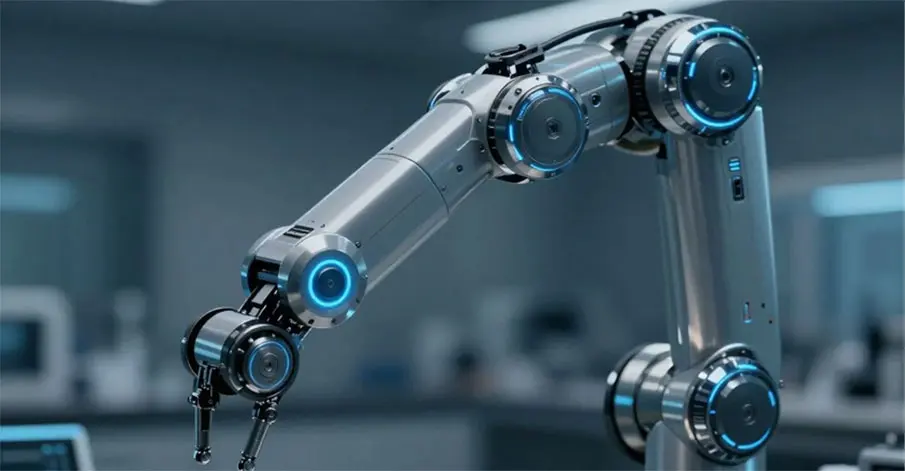
Alibaba Group has introduced RynnBrain, an open-source embodied intelligence model designed to power robots with advanced perception and action capabilities. The launch marks the company’s formal entry into the rapidly intensifying race to develop AI systems that operate in physical environments, extending beyond chatbots and digital assistants.
RynnBrain is positioned as a foundational model that equips robots with the ability to interpret their surroundings and perform real-world tasks. The initiative reflects China’s growing focus on physical AI, driven in part by demographic shifts such as ageing populations and labour shortages, which are increasing demand for machines capable of working alongside or substituting for human workers.
With this move, Alibaba joins global players such as Nvidia, Google DeepMind, and Tesla in pursuing what Nvidia CEO Jensen Huang has described as “a multitrillion-dollar growth opportunity.” However, Alibaba is differentiating itself through an open-source approach, making RynnBrain freely accessible to developers in order to accelerate adoption. This mirrors its strategy with the Qwen series of large language models, which are regarded among China’s most advanced AI systems.
Developed by Alibaba’s DAMO Academy, RynnBrain builds upon the company’s Qwen3-VL model and is designed for embodied intelligence applications. Video demonstrations released by the research division show robots powered by RynnBrain identifying fruit and placing it into baskets. While seemingly straightforward, such actions require sophisticated coordination of object recognition, spatial reasoning, and precise motor control.
The system falls within the category of vision-language-action models, which combine computer vision, natural language understanding, and motor execution capabilities. These models enable machines to interpret visual inputs, process contextual language instructions, and translate them into coordinated physical movements.
Unlike traditional industrial robots that rely on fixed, pre-programmed instructions, embodied AI systems such as RynnBrain allow robots to learn from experience and adjust their behaviour dynamically in real time. This shift from rigid automation to adaptive, autonomous decision-making in physical settings has implications that extend beyond manufacturing, potentially transforming logistics, healthcare, retail, and domestic environments.
Commenting on the development, Charlie Zheng, chief economist at Samoyed Cloud Technology Group Holdings, noted that the model’s spatial reasoning capability distinguishes it from peers and represents a significant advancement for Chinese developers working on embodied intelligence foundational models.
Through RynnBrain, Alibaba is seeking to strengthen its presence in the emerging embodied AI segment, positioning itself as a key player in the evolution of intelligent systems that bridge the digital and physical worlds.