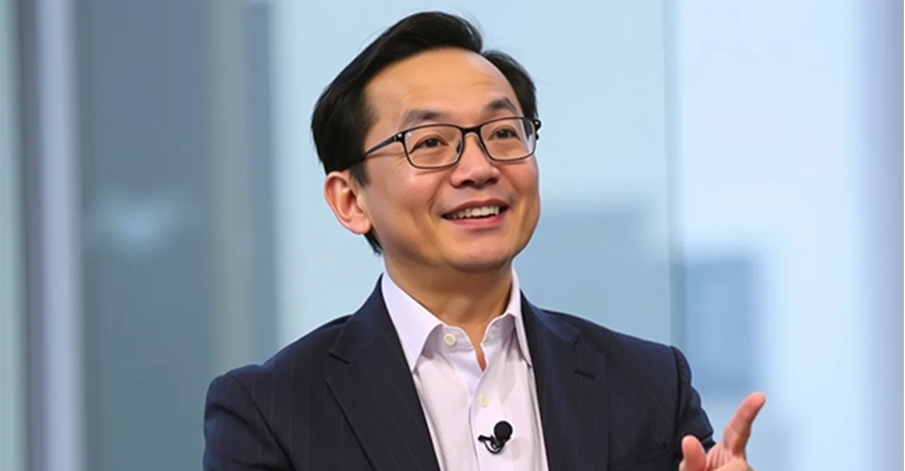

Alibaba Group chairman Joe Tsai has said that China’s rapid progress in artificial intelligence is being significantly supported by the country’s heavy investment in power grid infrastructure, underlining the critical role of energy in the AI race.
Speaking at the China Development Forum 2026 in Beijing, Tsai emphasized that artificial intelligence is an energy-intensive industry, and China’s long-term commitment to building a robust electricity network has given it a structural advantage. He noted that over the past decade, China has consistently invested heavily in power transmission, with annual spending averaging around $90 billion.
This large-scale investment has translated into substantial power generation capacity. According to Tsai, China’s newly installed power capacity last year was 10 times that of the United States, creating a strong foundation for AI development by ensuring both reliable supply and relatively lower energy costs.
Tsai also highlighted that China’s AI growth is not solely dependent on infrastructure but is supported by a broader ecosystem, including open-source AI models and a well-developed manufacturing supply chain. He pointed out that open-source initiatives have helped democratize access to AI technologies, allowing a wider range of companies and developers to participate in innovation.
The remarks come at a time when global competition in artificial intelligence is intensifying, with countries racing to build both computational capacity and supporting infrastructure. Energy availability has emerged as a key differentiator, as AI data centres require vast amounts of electricity to operate efficiently.
Tsai stressed that the goal of AI development should not just be to create the most advanced models, but to ensure widespread adoption that benefits society and drives economic growth. He added that China’s approach focuses on scaling applications across industries rather than limiting AI to a few large technology firms.
Industry observers note that China’s integrated strategy—combining infrastructure investment, policy support, and technological development—positions it strongly in the global AI landscape. However, challenges such as geopolitical tensions and supply chain constraints continue to influence the pace of progress.
The growing link between energy infrastructure and artificial intelligence highlights a broader shift in the tech industry, where access to power is becoming as critical as access to data and computing resources. As AI adoption accelerates, investments in energy systems are expected to play a decisive role in shaping the future of global technological leadership.