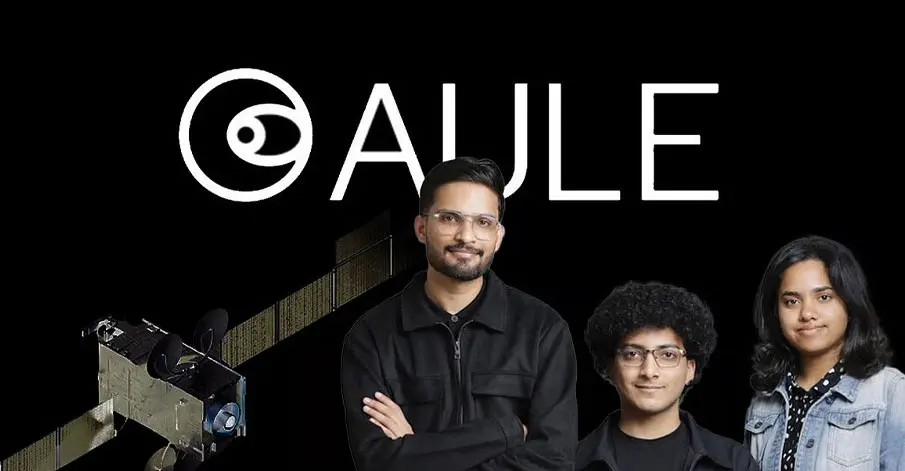
Most satellites do not stop functioning because their technology fails; they go dark because they exhaust their fuel. With India’s SpaDeX mission in January 2025, the country entered a small, elite group of nations that have successfully demonstrated autonomous space docking—a capability that could fundamentally reshape how long satellites operate in orbit and how frequently they need to be replaced. Building on that breakthrough, a Bengaluru-based startup is now aiming to turn docking into a commercial solution for extending satellite life.
Founded in 2024, Aule Space is developing what it calls “jetpack satellites”—small, autonomous spacecraft designed to rendezvous with ageing satellites, dock with them, and provide additional propulsion or life extension capabilities. The idea targets one of the most expensive inefficiencies in the space industry: retiring otherwise functional satellites simply because they run out of fuel.
Founder and CEO Jay Panchal believes the opportunity is immediate and massive. “If you had unlimited fuel, you could run the satellite for twice its life,” he said, likening Aule Space’s approach to “an external power bank attached to a phone.” Instead of replacing satellites that cost hundreds of millions of dollars, operators could potentially extend missions by years at a fraction of the cost.
Aule Space recently raised $2 million in a pre-seed funding round led by pi Ventures, with participation from industry veterans including Eash Sundaram and Arvind Lakshmikumar. The capital is being used to advance the company’s autonomous docking technology and prepare for its first demonstration mission, targeted for next year.
The technical challenge Aule Space is addressing lies at the heart of in-orbit servicing. Most satellites currently in space were never designed to be refuelled or serviced. Safely approaching them, matching their motion, and attaching without causing damage is one of the hardest problems in orbital operations. “We are solving the docking technology part,” Panchal said. “We can do it with the existing satellites, which were not designed to be refuelled.”
Investors see the startup as part of a broader shift in the space economy. Manish Singhal of pi Ventures views Aule Space as enabling a future that goes beyond launches, encompassing satellite servicing, orbital sustainability, and even space security. As satellite constellations multiply and orbits become increasingly crowded, technologies that extend asset life and reduce debris could become not just valuable, but essential to the next phase of space operations.