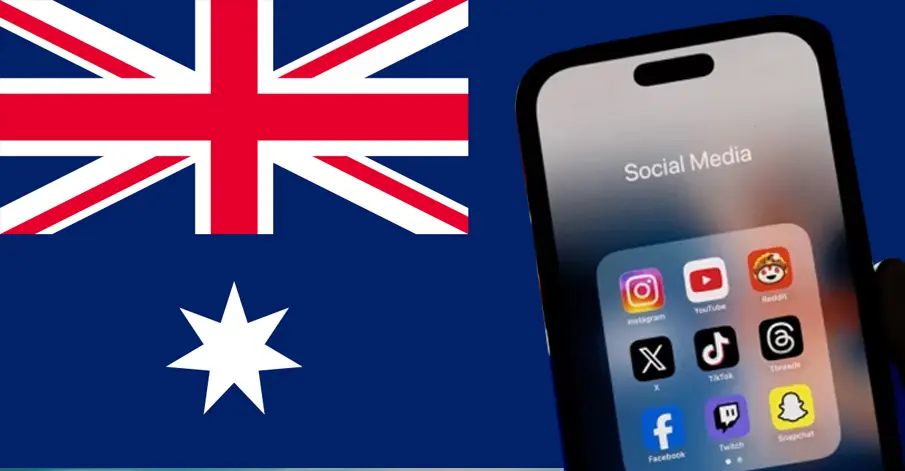
Australia has taken an unprecedented leap in digital regulation, becoming the first country to bar anyone under 16 from using major social media platforms. Starting Wednesday, apps including TikTok, Instagram, Facebook, YouTube and several others were legally required to block access for young users or risk penalties climbing to A$49.5 million.
Framed by the government as a long-overdue response to online harms, the move has drawn a sharp divide: tech giants and free-speech advocates warn of overreach, while many parents and child-safety groups applaud the shift as a necessary recalibration of the digital world.
Prime Minister Anthony Albanese described the law as a cultural turning point, a moment when public policy finally caught up with the scale of digital influence on young minds. He called it “one of the biggest social and cultural changes” in recent memory and said the world would be watching how Australia’s model unfolds. Ahead of the summer school break, he even encouraged children to rediscover offline hobbies, from books to sports to music.
In the final hours before the ban activated, countless Australian teens signed off with farewell posts. Some joked about disappearing until their 16th birthday; others expressed anxiety about losing access to communities they rely on.
The legislation closes a year-long debate over whether it is realistically possible to unplug minors from platforms that have become woven into everyday life. With research suggesting links between excessive social media use and rising mental-health concerns among early teens, including misinformation exposure, cyberbullying, and unhealthy body-image content, Canberra decided the risks outweighed the friction.
Other countries, from Denmark to Malaysia, have hinted they may evaluate the Australian experiment as a potential blueprint for their own regulations.
Even the most resistant companies have conceded. Elon Musk’s X platform acknowledged it had implemented age restrictions only because the law compelled it, noting that underage users would now be automatically removed. Australia has signalled the list of covered apps will evolve as new services emerge and user patterns shift.
To comply, platforms are deploying a mix of technologies, behaviour-based age inference, selfie-based age estimation, and in some cases document or bank-account verification. These measures usher in a new phase for social networks already grappling with slowing growth, shorter user engagement, and rising scrutiny.
While platforms say teenagers contribute little to ad revenue, they also admit this ban could erode their future user pipeline. Government data indicates that, before the law took hold, 86% of Australians aged eight to 15 were active on social media.
Some teens worry the ban could do the opposite of its intention. Fourteen-year-old Annie Wang noted that queer youth or those with niche passions often find community online, and removing that outlet may worsen feelings of isolation.
Australia now stands at the centre of a global test: can a nation meaningfully restrict children’s access to social media without cutting them off from vital support systems, or will this effort become the first of many attempts to redraw the boundaries of digital childhood?