




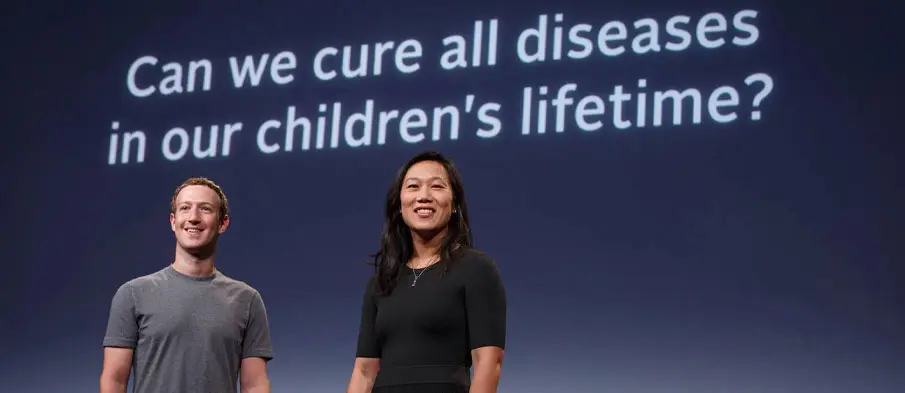
The Chan Zuckerberg Initiative (CZI) — the philanthropic organization founded by Mark Zuckerberg and Priscilla Chan — has announced a major restructuring to focus its scientific mission around artificial intelligence (AI) as it accelerates efforts to help cure, prevent, and manage all diseases. The move marks a significant shift for the organization, which has invested heavily in advancing biomedical research since its inception in 2016.
Under the new structure, CZI will centralize its scientific teams under a single entity known as Biohub, which will serve as the nucleus for its AI-powered research initiatives. In a statement, Biohub described the transition as a defining step toward transforming the way science is conducted. “This is a pivotal moment in science, and the future of AI-powered scientific discovery is starting to come into view,” the organization wrote in a blog post. “We believe that it will be possible in the next few years to create powerful AI systems that can reason about and represent biology to accelerate science.”
The updated mission envisions AI playing a transformative role in understanding and addressing human health — from detecting and preventing diseases to developing new cures. A key focus area will involve modeling the human immune system, which Biohub suggests could lead to breakthroughs in “engineering human health.”
Biohub’s blog post further emphasized, “We believe we’re on the cusp of a scientific revolution in biology — as frontier artificial intelligence and virtual biology give scientists new tools to understand life at a fundamental level.”
When CZI was first launched, its debut investment established the Biohub in San Francisco, designed to bring together scientists, researchers, and engineers to develop tools that enable better study and treatment of diseases. The initiative also acquired a Canadian startup specializing in AI-based analysis of scientific literature, enhancing researchers’ ability to extract insights from vast volumes of research data.
Reflecting on its progress, Biohub noted, “Our multidisciplinary teams of scientists and engineers have built incredible technologies to observe, measure and program biology.”
The renewed AI focus comes amid a broader wave of investment in artificial intelligence by major tech companies, including Meta, as the industry races to harness computing power and data to drive the next frontier of scientific discovery.



 — the philanthropic organization founded by Mark Zuckerberg and Priscilla Chan — has announced a major...)