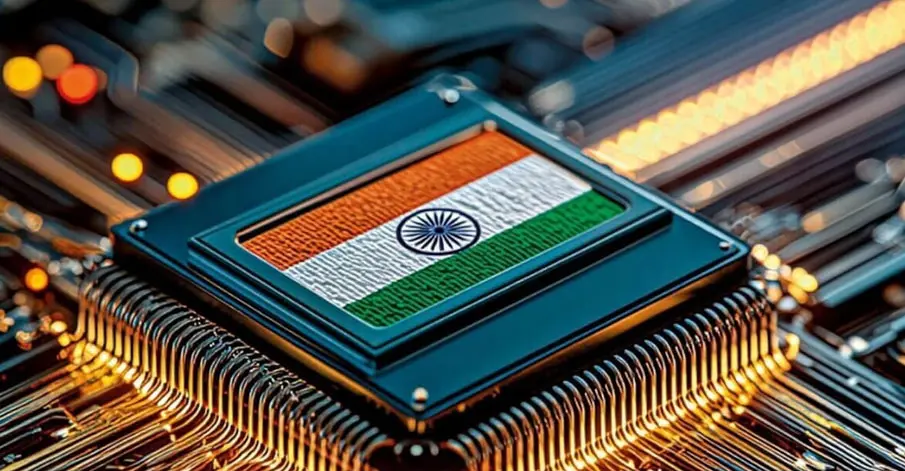
India’s push to strengthen its electronics manufacturing ecosystem has gained fresh momentum as the Ministry of Electronics and Information Technology (MeitY) approved 22 new proposals under the Electronics Components Manufacturing Scheme. The approved projects are expected to attract investments of ₹41,863 crore and generate production worth ₹2,58,152 crore, significantly expanding the country’s domestic manufacturing capabilities. Leading industry players such as Dixon Technologies India Limited, Samsung Display Noida Pvt Ltd, Foxconn Yuzhan Technology India Pvt Ltd, and Hindalco Industries are among those receiving approvals, underscoring growing industry confidence in India’s electronics ambitions.
Union IT Minister Ashwini Vaishnaw formally handed over the approval letters, with the ministry stating that the projects are projected to create 33,791 direct jobs. The new set of approvals builds on momentum from an earlier tranche of 24 applications cleared under the same scheme, reinforcing the government’s focus on scaling component-level manufacturing rather than relying heavily on imports.
The approved proposals span a wide range of electronic components and sub-assemblies that are critical to multiple sectors. These include mobile devices, telecommunications, consumer electronics, strategic and defence electronics, automotive systems, and IT hardware. By targeting these foundational building blocks, the scheme aims to address long-standing gaps in India’s electronics supply chain and move the country higher up the value curve.
Geographically, the projects are spread across Andhra Pradesh, Haryana, Karnataka, Madhya Pradesh, Maharashtra, Tamil Nadu, Uttar Pradesh, and Rajasthan, reflecting an effort to create a distributed manufacturing base rather than concentrating capacity in a few regions. The approved units will manufacture components such as printed circuit boards (PCBs), capacitors, connectors, enclosures, lithium-ion cells, camera and display modules, optical transceivers, aluminium extrusions, anode materials, and laminates.
According to the ministry, the broader objective is to strengthen domestic supply chains, reduce dependence on imports, and support the development of high-value electronics manufacturing in India. By encouraging local production of critical components, the government hopes to make India more resilient to global supply disruptions while also improving cost competitiveness for manufacturers operating in the country.
Taken together, the latest approvals signal a clear policy intent to deepen India’s electronics manufacturing ecosystem. With substantial investment commitments, job creation potential, and participation from global and domestic majors, the initiative marks another step toward positioning India as a key hub in the global electronics value chain.