As the IndiaAI Mission approaches a key checkpoint with the India AI Impact Summit scheduled for February 2026, attention is moving decisively from policy announcements to measurable delivery. Conceived to build sovereign artificial intelligence capabilities tailored to India’s scale and diversity, the mission is now entering a phase where product readiness, real-world deployment, and inference at scale are taking centre stage.
Since its launch, the IndiaAI Mission has supported several domestic companies in developing foundational AI models designed around India’s linguistic, cultural, and regional requirements. Progress, however, has not been without challenges. Early momentum was moderated by constraints around high-performance compute availability and the need to develop specialised AI talent. With these foundations gradually falling into place, the conversation has shifted toward operational readiness and scaling deployments.
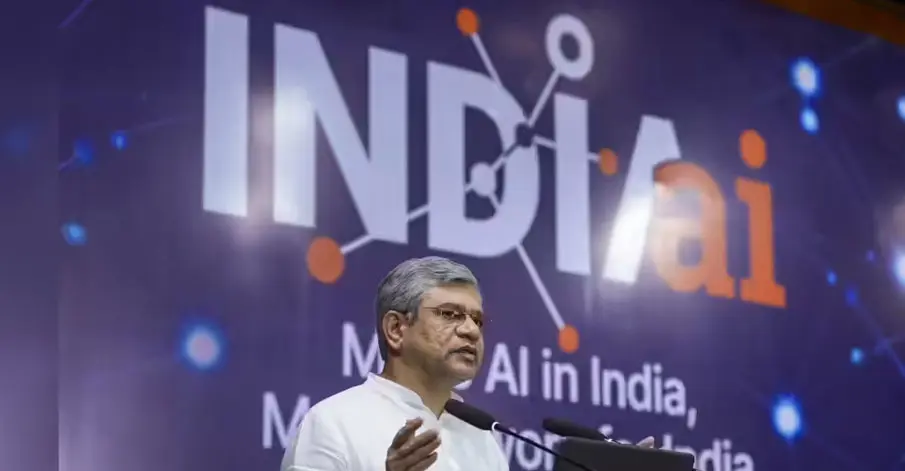
IndiaAI Mission CEO Abhishek Singh struck an optimistic tone while reflecting on the journey so far. “The mission has progressed most desirably, and the team is now gearing up for product launches and inference at scale,” he told AIM in an exclusive interaction. Singh also revealed plans for a voice-based large language model focused on cybercrime, describing it as the first application of its kind to be developed in India. At the same time, he acknowledged that building domestic compute capacity and skilled talent pools has required time and sustained effort.
Beyond technology development, the mission is also grappling with broader questions around governance, funding models, and long-term monetisation. These elements will play a critical role in determining how India’s sovereign AI ambitions translate into sustainable national infrastructure rather than short-term pilots.
On the regulatory front, Singh emphasised a measured approach. “We recently published our AI governance guidelines, and I believe the current legal provisions are sufficient to handle the risks AI poses. AI is just another technology, and it’s never wise to regulate technology itself,” he said, advocating instead for regulation focused on specific applications and use cases rather than the underlying technology.
With GPU infrastructure beginning to come online and early use cases moving toward deployment, the mission is entering a decisive phase. The central question now is whether India’s emphasis on indigenous models, population-scale applications, and local context can move beyond experimentation to deliver tangible impact across governance, security, and public services.
As the February 2026 summit approaches, the IndiaAI Mission’s ability to convert ambition into outcomes will be closely watched as a test case for sovereign AI at national scale.