

India is stepping into one of the most consequential investment decades in its history. Despite a challenging global environment marked by inflationary pressures, supply-chain disruptions, and geopolitical conflicts, the country attracted nearly USD 81 billion in foreign direct investment last year, a 14 percent year-on-year increase. With GDP growth projected between 7 and 7.2 percent, India continues to stand out as a compelling destination for global capital.
At the same time, investors today rank geopolitical risk as their single biggest concern. Conflicts, trade frictions, and great-power tensions can now move markets in hours rather than months. In such an environment, long-term wealth creation demands a careful balance of conviction and agility.
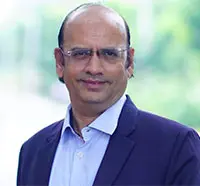
To unpack how investors should navigate this new cycle, Digital Dialogues spoke with Manoj Trivedi, Co-founder of Maxiom Wealth, whose perspective across high-net-worth portfolios and global capital behaviour offers clarity on managing risk, uncertainty, and opportunity.
The Changing Meaning of “Risk-Free”
According to Trivedi, the idea of truly risk-free investments has significantly eroded. While investors commonly associate risk only with market volatility, reinforced by regulatory disclosures, there are multiple dimensions of risk that require equal attention. Credit risk, interest-rate risk, and liquidity risk are increasingly relevant in today’s environment.
The nature of assets themselves has also evolved. Instruments once considered safe havens are now vulnerable to volatility, driven by changing geopolitical equations, trade frictions, and the growing dominance of derivatives, ETFs, and speculative trading activity. As Trivedi points out, even traditional stores of value such as gold and real estate have witnessed sharp short-term fluctuations.
That said, from a long-term perspective, these assets continue to play an important role. Precious metals and real estate can still provide stability and positive returns over time, even if they no longer deliver the kind of outsized appreciation seen in earlier cycles. Alongside these, government-backed savings instruments such as provident funds, senior citizen savings schemes, and other structured options remain among the more reliable avenues for capital safety when aligned with long-term financial goals.
The key, Trivedi emphasises, is acknowledging that while investors cannot control global disruptions, they can design portfolios that reflect the realities of a structurally unstable world.
Faster Markets, Slower Interpretation
One of the defining challenges of the current investment landscape is the speed at which markets react to events. Investors are confronted with new developments almost daily, often finding that markets have already moved before there is time to fully interpret the implications.
This challenge has been amplified by algorithmic trading, where automated systems execute trades based on predefined triggers. For high-net-worth and large-ticket investors, this necessitates a recalibration of decision-making frameworks.
Trivedi highlights the importance of ensuring adequate exposure to relatively low-risk assets from a long-term perspective, while also incorporating scenario and sensitivity analysis into portfolio construction. Rather than attempting to predict specific outcomes, investors need to visualise what could potentially go wrong and prepare accordingly.
Liquidity buffers play a critical role in this approach. Maintaining a portion of the portfolio in cash, holding defensive stocks, and deploying tactical tools such as stop-loss mechanisms and algorithm-based execution strategies can help protect portfolios from sudden shocks. Just as importantly, these measures prepare investors mentally to deal with uncertainty and volatility as a constant feature of markets.
Following Capital Flows and Structural Themes
Despite heightened volatility, certain patterns continue to repeat themselves. Markets remain fundamentally driven by capital flows, and tracking where long-term capital is being deployed provides valuable insight.
In India, domestic institutional investors have emerged as a stabilising force, supported by sustained inflows through systematic investment plans. While foreign investors continue to influence markets, their approach has become increasingly selective and theme-driven, with a shorter investment horizon focused on specific opportunities rather than broad exposure.
Over the past year, this shift has been evident in reduced allocations to sectors such as IT, pharmaceuticals, and consumer durables, alongside increased interest in defence, infrastructure, and capital-intensive segments. Domestic investors, on the other hand, have maintained broader participation across sectors, helping absorb volatility.
As Trivedi notes, capital will always flow toward areas where returns are most likely, and this fundamental behaviour of markets remains unchanged.
Principles for Long-Term Wealth Preservation
In a world where a decade of change can unfold within a single quarter, traditional principles such as diversification and patience have not lost relevance—if anything, they have become more critical.
Long-term portfolios increasingly need to be structured as all-weather portfolios. This includes meaningful exposure to high-quality fixed income, precious metals as effective hedges during downturns, and companies capable of generating predictable cash flows. Sectors such as energy and infrastructure, where regulatory frameworks provide visibility and inflation-linked revenues, can offer resilience in uncertain times.
At the same time, investors must remain aligned with future-facing opportunities. Sectors critical to national priorities over the next 5 to 15 years—such as defence, infrastructure, cybersecurity, semiconductors, capital goods, and niche technology—present opportunities not only for downside protection but also for significant upside.
Technology and the Future of Portfolio Management
As artificial intelligence, algorithms, and digital tools become ubiquitous across industries, investment management itself is undergoing a fundamental transformation. Traditional portfolio management frameworks may no longer be sufficient on their own.
Trivedi stresses the need for continuous adaptation, openness to new approaches, and greater investment in AI and digital transformation. As technology becomes inseparable from decision-making, future success in wealth management will increasingly be tech-powered.
Conviction Meets Agility
The overarching takeaway from the discussion is clear: change is inevitable. Successful wealth creation will depend on the ability to combine long-term conviction with short-term adaptability. Investors who understand this balance will be better positioned to preserve wealth and benefit from compounding, even as uncertainty accelerates.
In today’s environment, resilience is no longer just a defensive trait—it has become a strategic advantage.
Attribution
This article is based on a video interview conducted on Digital Dialogues, powered by CXO Digital Pulse, with Manoj Trivedi, Co-founder, Maxiom Wealth.