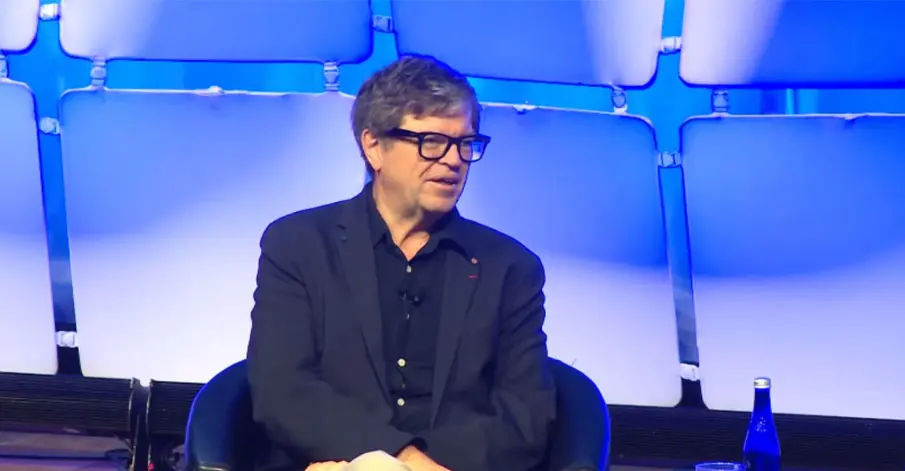

Yann LeCun, Meta’s Chief AI Scientist and one of the founding figures of modern artificial intelligence, is set to leave the company to start his own AI venture, marking a major shift in Meta’s leadership and research direction. LeCun’s departure comes as Mark Zuckerberg undertakes a sweeping overhaul of Meta’s AI strategy, emphasizing speed, commercialization, and large-scale deployment over foundational research.
LeCun, who established and led Meta’s Fundamental AI Research Lab (FAIR) since 2013, is reportedly in early discussions to raise funding for a new startup dedicated to developing next-generation AI systems. His venture is expected to advance his long-standing research into “world models” — systems that enable machines to learn through videos, spatial understanding, and sensory perception rather than relying solely on text. This approach could pave the way for AI that learns and reasons more like humans.
Zuckerberg’s strategic shift has been accompanied by major organizational changes. Over the summer, he brought in Alexandr Wang, the founder of Scale AI, in a $14.3 billion deal that gave Meta a 49 percent stake in Wang’s company. Wang was appointed to lead Meta’s new Superintelligence team, a move that placed him above LeCun in the reporting hierarchy. Since then, LeCun has reportedly disagreed with Meta’s growing dependence on large language models (LLMs), asserting that while they are “useful,” they will never be able to “reason or plan like humans.”
LeCun’s impending exit highlights the growing philosophical divide within Meta’s AI leadership — between those prioritizing immediate commercial applications and those advocating for long-term, science-driven innovation. His decision follows a series of executive reshuffles and high-profile departures, as Meta navigates intense investor scrutiny and mounting AI-related expenses projected to exceed $100 billion in the coming year.
Industry analysts view LeCun’s move as a potential inflection point for both Meta and the broader AI ecosystem. By stepping away from a corporate framework, LeCun is expected to pursue more open-ended research into the foundations of intelligence — an area he believes remains critical to achieving truly human-like reasoning and understanding in artificial systems.