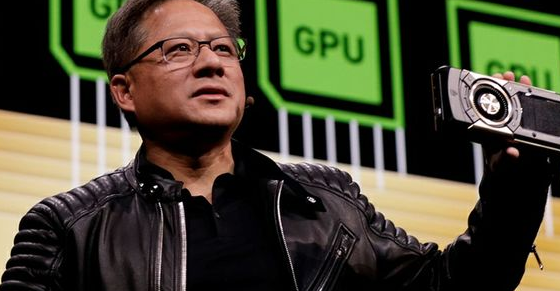
Nvidia Chief Executive Officer Jensen Huang indicated that the company is unlikely to make further investments in artificial intelligence firms OpenAI and Anthropic, suggesting that its existing stakes in both companies may be the final ones. Speaking at the Morgan Stanley Technology, Media and Telecom conference in San Francisco, Huang said that once these companies eventually move toward public listings, the window for additional private investment effectively closes.
While the explanation may appear straightforward, the development raises broader questions about Nvidia’s long-term strategy in the rapidly evolving AI ecosystem. Nvidia has become one of the biggest beneficiaries of the AI boom by supplying high-performance chips that power large language models and advanced AI infrastructure used by companies such as OpenAI and Anthropic. With demand for its processors surging, the company has generated substantial revenue from hardware sales alone.
A spokesperson for Nvidia did not expand further on Huang’s comments and instead referred to remarks made during the company’s fourth-quarter earnings call. In that call, Huang stated that Nvidia’s investment strategy is “focused very squarely, strategically on expanding and deepening our ecosystem reach,” indicating that earlier investments in AI companies were designed to strengthen partnerships and broaden the company’s influence across the AI development landscape.
However, the structure of some of these partnerships has drawn attention within the industry. When Nvidia initially announced plans last September to invest up to $100 billion in OpenAI, some analysts described the arrangement as circular. MIT Sloan professor Michael Cusumano told the Financial Times at the time that the deal appeared “kind of a wash,” noting that Nvidia was investing heavily in OpenAI while the AI company was expected to spend a similar amount purchasing Nvidia’s chips.
That dynamic may partly explain why Nvidia’s eventual investment commitment was smaller than originally discussed. The company finalized a $30 billion investment in OpenAI as part of the AI firm’s $110 billion funding round last week, a figure significantly lower than the previously suggested $100 billion level. Huang has dismissed speculation that tensions between Nvidia and OpenAI influenced the decision, describing such claims as “nonsense.”
Nvidia’s relationship with Anthropic has also faced complications. Shortly after Nvidia announced a $10 billion investment in Anthropic in November, the AI startup’s CEO Dario Amodei drew controversy at the World Economic Forum in Davos by comparing the sale of advanced AI chips to certain Chinese customers with “selling nuclear weapons to North Korea,” a remark widely interpreted as criticism of U.S. chip manufacturers.
Recent geopolitical developments have further intensified the situation. The Trump administration recently blacklisted Anthropic, preventing federal agencies and military contractors from using its technology after the company declined to allow its AI models to be deployed for autonomous weapons systems or large-scale domestic surveillance.
Within hours of that announcement, OpenAI revealed that it had reached an agreement with the Pentagon to provide its AI models for use within the Department of Defense’s classified network. Anthropic criticized the move, describing the company’s stance as “mendacious.”
Public reaction to the developments appeared to shift momentum between the competing AI platforms. Within a day of the announcements, Anthropic’s Claude application surged to the top of the free app rankings on Apple’s U.S. App Store, surpassing OpenAI’s ChatGPT. According to Sensor Tower data, Claude had been ranked outside the top 100 just weeks earlier at the end of January.
The diverging strategies of OpenAI and Anthropic now place Nvidia in a complex position as an investor in both companies, which are pursuing different approaches to government and defense partnerships. Huang’s comments about limiting further investments could signal an effort by Nvidia to simplify its involvement as the competitive landscape in AI continues to evolve.
Although Huang attributed the potential pullback to the closing of investment opportunities once companies approach public listings, some industry observers believe the explanation may not fully capture the situation. Late-stage private investments often continue close to IPO timelines, suggesting that Nvidia’s decision could also reflect the increasing complexity of its relationships with key partners in the AI sector.