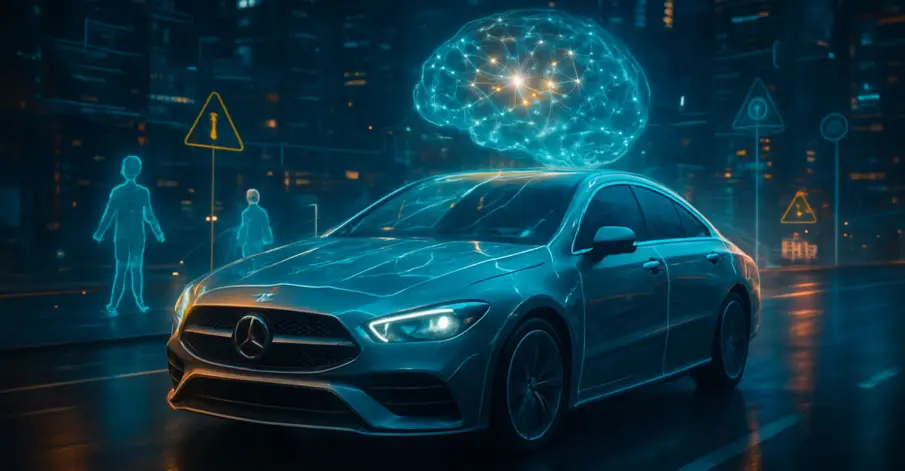
NVIDIA is set to mark a significant milestone in automotive artificial intelligence as its DRIVE AV software heads for its first real-world deployment on public roads, debuting in the new Mercedes-Benz AG CLA in the United States later this year. Integrated into Mercedes-Benz’s proprietary MB.OS platform, the system will deliver Level 2 point-to-point driver assistance, continuous over-the-air software updates, and advanced AI-driven features that have already helped the vehicle secure a five-star Euro NCAP safety rating.
The deployment reflects NVIDIA’s growing role in shaping the future of software-defined vehicles. By embedding intelligence directly into the vehicle architecture, the company aims to enable cars that improve over time through data, updates, and learning. As Ali Kani highlighted, “NVIDIA is the intelligence backbone that makes every vehicle programmable, updatable and perpetually improving through data and software.” This philosophy positions NVIDIA not just as a chipmaker, but as a foundational technology partner for next-generation mobility.
At the core of the DRIVE AV system is a dual-stack architecture designed to balance innovation with safety. The platform combines an AI-based driving stack with a parallel, classical safety system, allowing the vehicle to handle complex urban driving scenarios while maintaining redundancy for critical functions. This setup supports capabilities such as city navigation, collision avoidance, and automated parking, all while meeting stringent automotive safety standards.
Development and validation of these features are accelerated through NVIDIA’s virtual simulation tools, including Omniverse and Cosmos. These platforms allow engineers to test millions of driving scenarios in digital environments before deployment, reducing risk and speeding up time to market. By simulating edge cases and rare events at scale, NVIDIA and Mercedes-Benz aim to deliver a more robust and reliable driver assistance experience.
With Mercedes-Benz adopting DRIVE AV for a production vehicle, NVIDIA is signaling a broader shift toward AI-first automotive engineering. The rollout underscores how software, data, and continuous updates are becoming central to vehicle performance and safety. As more automakers move toward programmable, AI-powered platforms, NVIDIA’s entry onto public roads marks an important step in bringing advanced automotive AI from controlled testing environments into everyday driving.