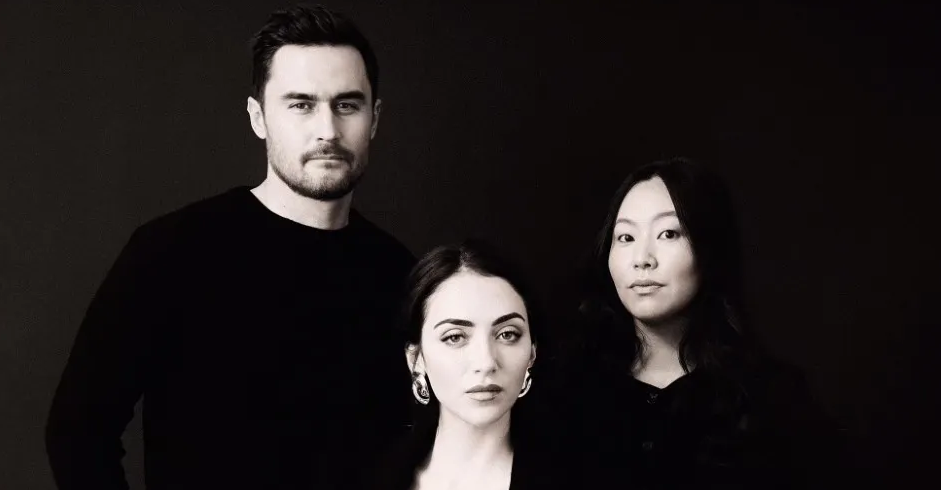
Cami Tellez, the entrepreneur behind the once-viral Gen Z undergarments brand Parade, has unveiled her next venture: an influencer marketing platform called Devotion. The company, co-founded with former TikTok executive Jon Kroopf, aims to help large brands scale and manage their creator programs more efficiently using artificial intelligence. Alongside the launch, Devotion announced it has raised $4 million in funding in a round led by Basecase and Will Ventures.
Tellez first gained prominence in 2019 when she launched Parade at age 21. The brand quickly attracted millions in funding and a strong Gen Z following before being acquired in 2023 by lingerie manufacturer Ariela & Associates. Parade officially shut down operations late last year. Now, Tellez is turning her focus to the evolving creator economy.
Devotion is designed to address a growing challenge for brands: managing influencer relationships at scale. Traditionally, companies rely on internal teams to identify, negotiate with, and oversee collaborations with influencers. As social platforms and algorithms evolve rapidly, that manual process has become increasingly complex and resource-intensive.
“The first version of the creator economy was built around macro creators, brands working with 15 or 20 highly visible faces each month,” Tellez said. “That model hasn’t worked.” Referencing a 2025 IAB report that shows creators account for roughly 2% of total advertising spend, she added, “The issue isn’t belief in creators, it’s unlocking the high-scale model that works in a content-based algorithm.”
Devotion uses AI to streamline creator discovery, campaign management, and content analysis. The platform can evaluate influencers’ posts and captions to ensure they align with brand guidelines, recommend which content to amplify, generate brand-fit scores, and manage creator payments. Despite automation, Kroopf emphasized that human oversight remains central to the system. “There are no rogue-like agents that operate independently of a human review,” Kroopf said. “But they make everything we do much faster.”
Tellez, who serves as Devotion’s creative director, described the approach as building “high-scale creator ecosystems.” According to her, brands must now think beyond a small group of high-profile influencers and instead engage hundreds or even thousands of creators monthly to maximize algorithmic reach while lowering CPMs.
The company spent much of last year operating in beta and has already signed more than 10 clients, generating seven-figure revenue. The newly secured funding will be used to expand engineering and brand operations teams and to enhance Devotion’s technology infrastructure.
Tellez’s experience with Parade played a significant role in shaping the concept. “In 2019, when I started Parade, there was no real kind of software that allowed you to really engage ambassadors at scale,” she said. Her team built internal tools to track gifting, payments, and engagement with creators, which she credits as a major driver of Parade’s growth. Other founders frequently approached her to understand how to replicate that strategy.
She also noted that the creator landscape has shifted dramatically, largely due to algorithmic changes led by platforms like TikTok. Five years ago, a creator’s post might reach around 20% of their followers. Today, that figure is closer to 2%. “The feed is no longer determined based on your social graph or your follower count,” Tellez said. “It’s much more determined on the performance of the content and the algorithm and driven by your interests and other content, similar content you have interacted with.”
This shift, she argues, has democratized influence. “We’re entering into a new paradigm where influence has been democratized,” Tellez said, adding that a nurse in Ohio now has the same algorithmic potential as a large-scale creator if the content performs well.
Devotion competes in a space that includes other creator economy platforms such as Pearpop, but Tellez and Kroopf believe AI-driven scale will define the next phase of the industry. The company plans to introduce additional AI agents in the future, though further details have not yet been disclosed.
“We are already seeing the consensus shift towards our vision for scaled creator ecosystems for even the world’s largest and traditionally most risk-averse brands,” Tellez said. “They don’t want to get caught behind the algorithm. At the same time, we’re deepening our AI systems so we can manage thousands of creators with precision — without sacrificing taste or intimacy.”