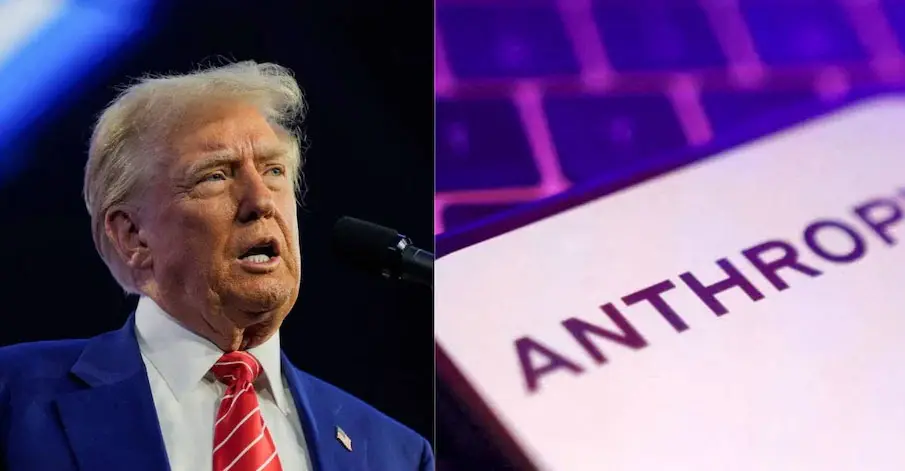
The US administration has moved to sever ties with Anthropic following a public dispute between the company and the Department of Defense over the use of its AI models.
In a post on Truth Social, President Donald Trump directed federal agencies to cease use of all Anthropic products, allowing a six-month phase-out period for departments currently using the technology. He stated that Anthropic would no longer be welcome as a federal contractor.
“We don’t need it, we don’t want it, and will not do business with them again,” the president wrote.
While the president’s post did not explicitly reference earlier discussions about designating Anthropic as a supply-chain risk, a subsequent statement from Defense Secretary Pete Hegseth formalised that step.
“In conjunction with the President’s directive for the Federal Government to cease all use of Anthropic’s technology, I am directing the Department of War to designate Anthropic a Supply-Chain Risk to National Security,” Secretary Hegseth wrote. “Effective immediately, no contractor, supplier, or partner that does business with the United States military may conduct any commercial activity with Anthropic.”
The dispute reportedly centered on Anthropic’s refusal to permit its AI models to be deployed for mass domestic surveillance or fully autonomous weapons systems—conditions the Department of Defense viewed as restrictive. Anthropic has maintained that such safeguards are central to its responsible AI framework.
Chief Executive Officer Dario Amodei reiterated the company’s position in a public statement, emphasizing its willingness to continue supporting defense operations under specific constraints.
“Our strong preference is to continue to serve the Department and our warfighters — with our two requested safeguards in place,” Amodei wrote. “Should the Department choose to offboard Anthropic, we will work to enable a smooth transition to another provider, avoiding any disruption to ongoing military planning, operations, or other critical missions.”
The move marks a significant escalation in tensions between federal defense authorities and one of the leading AI developers, raising broader questions about the balance between national security priorities and corporate guardrails in advanced AI deployment.