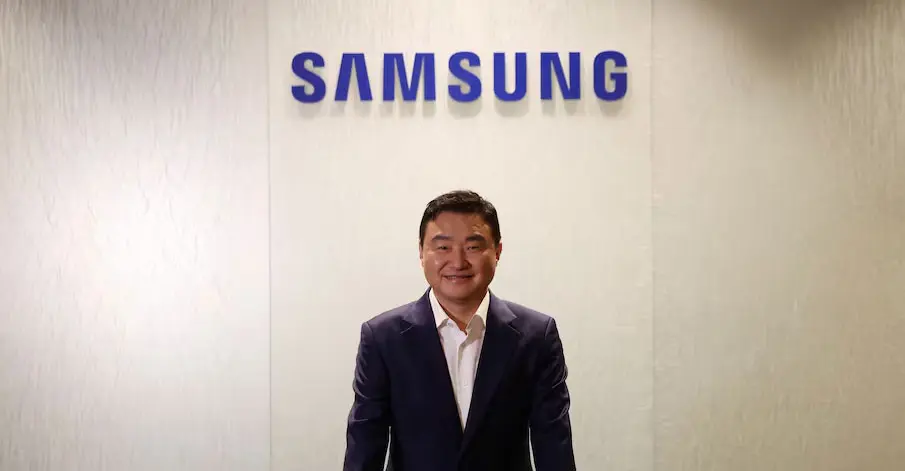
Samsung Electronics is doubling down on artificial intelligence as co-CEO TM Roh outlines an ambitious plan to rapidly expand AI-powered capabilities across the company’s product ecosystem. The strategy centers on scaling Gemini-powered features from roughly 400 million devices today to about 800 million, positioning Samsung as a key ally in strengthening Google’s competitive stance in the AI race while intensifying its own rivalry with Apple across smartphones and consumer electronics. “We will apply AI to all products, all functions, and all services as quickly as possible,” Roh said.
The push comes at a pivotal moment for Alphabet’s Google, which is locked in an intensifying battle with OpenAI to define the future of consumer-facing AI. For Samsung, deeper Gemini integration not only reinforces its partnership with Google but also helps differentiate its Galaxy lineup as AI becomes a core purchase consideration. Roh noted that consumer familiarity with Galaxy AI has risen sharply, with awareness now reaching 80%. He suggested that early skepticism around AI tools is likely to fade quickly, adding, “Even though the AI technology might seem a bit doubtful right now, within six months to a year, these technologies will become more widespread.”
Samsung is already seeing growing engagement with AI-driven features across its devices. According to Roh, users are increasingly relying on AI-enabled search, photo and video editing tools, real-time translation, and automated summaries, signaling a shift in how consumers interact with everyday technology. By embedding these capabilities more deeply across phones, wearables, and other connected products, Samsung aims to make AI a default layer rather than a standalone feature.
However, the aggressive AI expansion is unfolding against a challenging backdrop. A global shortage of memory chips is putting pressure on supply chains, costs, and profit margins across the electronics industry. Roh acknowledged the scale of the disruption, saying, “As this situation is unprecedented, no company is immune to its impact.” While Samsung is working closely with partners on longer-term strategies to mitigate the effects, he warned that some impact on pricing may be difficult to avoid, describing potential increases as “inevitable.”
Despite these headwinds, Samsung appears committed to maintaining momentum. By accelerating AI adoption at scale while navigating supply constraints, the company is signaling that artificial intelligence will be central to its competitive strategy in the years ahead—both as a differentiator for consumers and as a pillar in the broader battle shaping the global tech landscape.