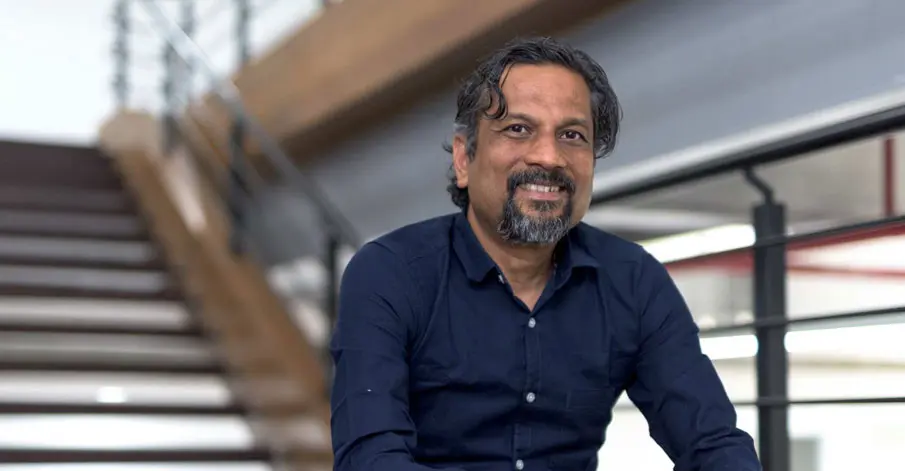
Sridhar Vembu, Chief Scientist at Zoho, has shared a compelling example of how artificial intelligence is dramatically reshaping software development productivity within the company. In a post on X, Vembu revealed that a single senior engineer from Zoho’s R&D team independently developed a sophisticated assembly- and machine-code–level security tool in just one month—work that would traditionally have taken three to four engineers and close to a year to complete.
What made the achievement even more striking was the way the project came together. According to Vembu, the engineer pursued the work quietly, in spare time, without any formal directive, roadmap, or organisational planning. Vembu noted that he only learned about the effort when the engineer later demonstrated the finished tool to him, describing his own reaction as one of surprise at both the depth and the scope of what had been built in such a short span.
The engineer attributed the sharp acceleration in development to the use of the Opus 4.5 AI model, describing it as a “game changer”. He reportedly began the project with some scepticism about AI-generated code but found that the model significantly sped up experimentation, iteration, and problem-solving as the work progressed. The AI assistance enabled rapid exploration of ideas and refinements that would otherwise have been time-consuming or impractical for a single developer.
Vembu used this example to underline Zoho’s long-standing culture of encouraging engineers to independently explore ideas and experiment beyond formal project boundaries. He suggested that such an environment, when combined with powerful AI tools, can unlock unexpected innovation and productivity gains that traditional planning models may not anticipate.
Reflecting on the broader implications, Vembu compared the current moment in software development to the introduction of machine looms during the industrial era—a shift that fundamentally altered assumptions about labour, productivity, and scale. As AI tools increasingly challenge long-held beliefs around team size, development timelines, and individual output, he suggested that organisations will need to rethink how human expertise and machine leverage work together.
The example, he implied, is not just about faster coding, but about a deeper transformation in how software is conceived, built, and scaled in the age of AI.