As financial services become increasingly digital, the definition of resilient infrastructure is evolving. The focus is no longer limited to preventing disruption, but also on ensuring rapid recovery, uninterrupted customer experience, and stronger operational continuity. Hybrid environments, embedded security, scalable architecture, and AI-led decision support are now central to how financial technology systems are being designed and governed.
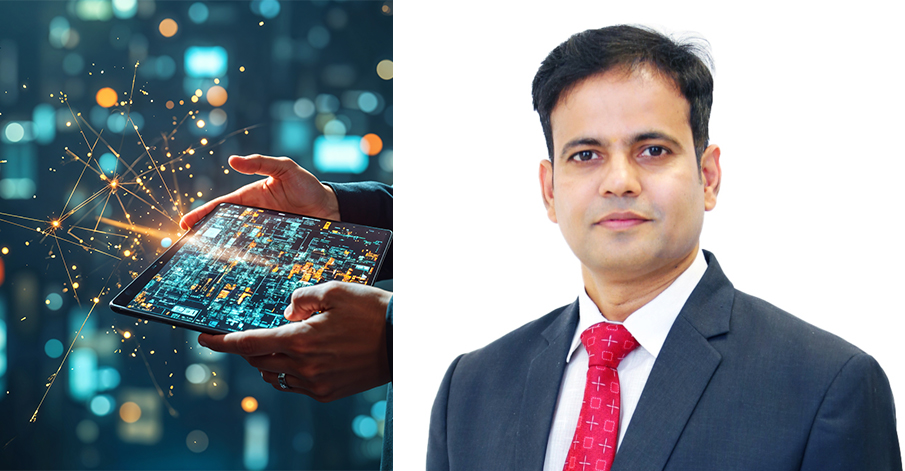
In this conversation with CXO Digital Pulse, Mr. Siteshwar Srivastava, Chief Information Officer (CIO) and Chief Technology Officer (CTO) at Alankit Limited, shares his perspective on the changing priorities shaping financial infrastructure, from resilience-by-design and hybrid IT complexity to security-first deployment and the responsible use of AI in critical financial systems.
CXO Digital Pulse: Systems today are built to recover, not just avoid failure. How is this changing the way financial infrastructure is designed?
Mr Siteshwar: A decade ago, most discussions around resilience were centred on preventing outages. Today, technology leaders recognise that disruptions will occur, particularly as systems become more interconnected. The real measure of resilience is how quickly services can be restored and how little impact is felt by customers. That thinking is shaping investment priorities across the industry, from architecture and monitoring to business continuity planning.
CXO Digital Pulse: With hybrid environments becoming the norm, what are the biggest challenges in keeping systems fast, scalable, and always available?
Mr Siteshwar: Hybrid environments offer flexibility, but they also add layers of complexity. Many organisations are operating a mix of legacy platforms and modern cloud infrastructure, each with different performance and operational requirements. The challenge is maintaining consistency across this ecosystem. As digital services scale, seamless integration and operational visibility become just as important as infrastructure capacity.
CXO Digital Pulse: Security is now part of the foundation, not an add-on. How is this changing the way technology solutions are built and deployed?
Mr Siteshwar: Trust has become a business priority, not merely a technology concern. Customers expect their data to be protected from the moment they engage with a digital service. As a result, security considerations are being built into technology decisions much earlier. Organisations that take this approach are often better positioned to innovate with confidence because risk management becomes part of the development process rather than a final checkpoint.
CXO Digital Pulse: As AI takes a bigger role in operations and decisions, how do organisations balance automation with human control in critical financial systems?
Mr Siteshwar: AI can process information faster than any human team, but accountability remains a human responsibility. In financial services, that distinction is particularly important. The objective should be to use AI to improve speed, accuracy and decision support while ensuring that oversight and governance remain firmly in place. Long-term trust in AI will depend as much on responsible implementation as on technological capability.