
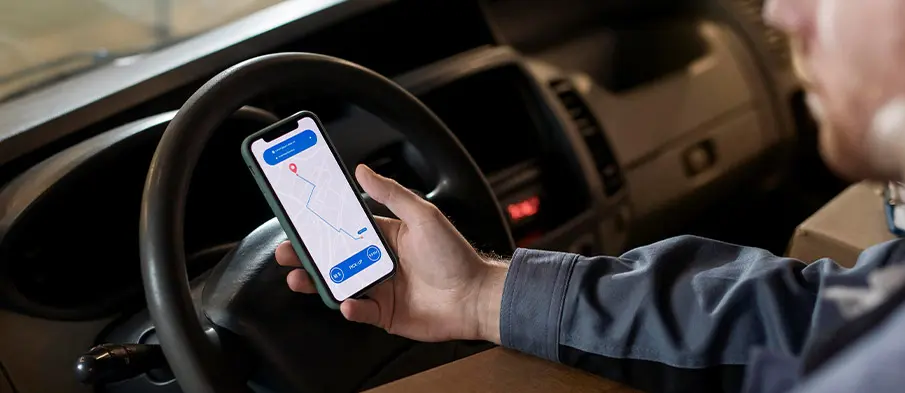
The Ministry of Road Transport and Highways has directed ride-hailing aggregators to remove tipping prompts displayed before or during a journey, requiring platforms to redesign booking interfaces that suggest an additional payment could improve the probability or speed of securing a ride.
The August 11 directive applies to app-based aggregators including Uber, Ola and Rapido. It identifies prompts such as “Advance Tip,” “Choose an Add-on” and messages offering a better chance of quicker ride confirmation as inconsistent with the Motor Vehicle Aggregator Guidelines, 2025.
Clause 14.15 of the guidelines permits passengers to tip drivers only after a journey has been completed. A tip must remain voluntary, and the entire amount must be transferred to the driver. Aggregators cannot retain a commission or make any other deduction from the payment.
The ministry has also prohibited interface elements that directly or indirectly create the impression that an additional payment can influence driver acceptance, allocation, waiting time or service quality. Platforms have been asked to review their applications and digital services immediately and modify any non-compliant functionality without delay.
The intervention addresses the way pricing and allocation mechanisms are presented inside mobility applications. Advance tipping had increasingly functioned as an additional bidding layer during periods of limited driver availability, even though the base fare and applicable dynamic-pricing limits are governed by the aggregator framework. By linking an optional payment to ride confirmation, an interface could make a voluntary tip appear operationally necessary.
The 2025 guidelines provide the broader compliance architecture for ride-hailing businesses. Aggregators require state licences valid for five years, with a Rs 5 lakh licence fee and security deposits ranging from Rs 10 lakh to Rs 50 lakh depending on fleet size. State-notified fares serve as the base fare, while platforms may discount prices by as much as 50% or apply dynamic pricing of up to twice the base fare.
The framework also prescribes driver-verification and welfare requirements. Drivers must undergo document, medical, eyesight, psychological and police checks and complete 40 hours of training. Aggregators must provide health insurance of at least Rs 5 lakh and term insurance of at least Rs 10 lakh. Vehicles require valid registration, fitness, insurance and pollution certificates, AIS-140 tracking and panic buttons.
Violations can attract penalties ranging from Rs 1 lakh to Rs 1 crore. Serious or repeated breaches can result in licence suspension, cancellation and forfeiture of the aggregator’s security deposit. The latest directive converts the post-trip tipping provision into an immediate product-compliance requirement affecting booking, payment and driver-allocation interfaces.