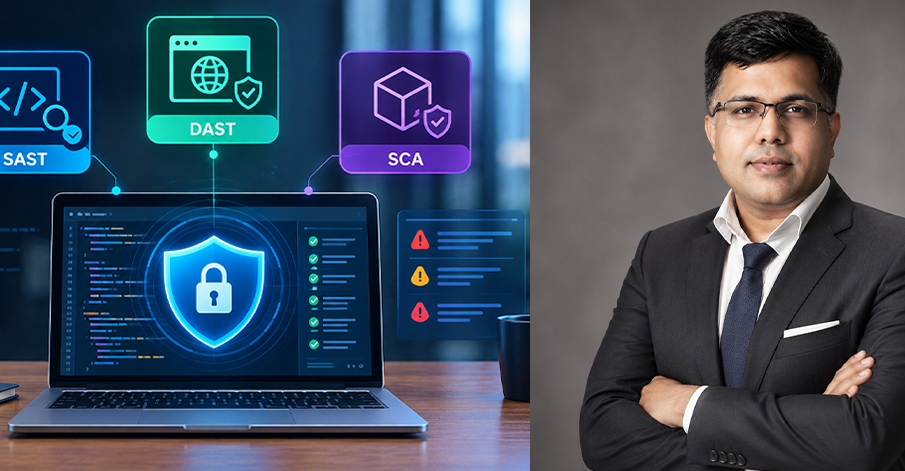
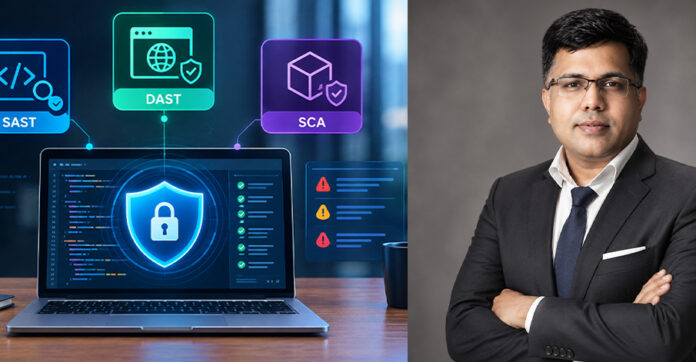
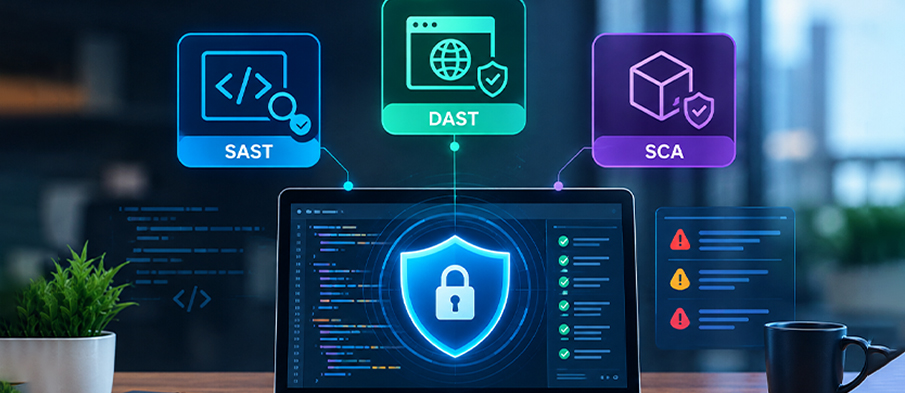
Most CISOs will say they have SAST, DAST, and SCA covered. In practice, many have tool presence, not risk reduction. What’s changed and many programs haven’t caught up is the emergence of frontier AI models like Claude Mythos and GPT-4, which are fundamentally altering how vulnerabilities are discovered, exploited, and remediated. Your application security posture is now competing against machines that can reason over codebases at scale.
- The Problem This Solution Must Solve
Application security platforms sit across CI/CD pipelines, repositories, and runtime environments. Their role is no longer just to find flaws it is to outpace adversaries who are using AI to generate exploits faster than your teams can triage.
SAST, DAST, and SCA mitigate insecure code, runtime flaws, and supply chain risks but the threat model has evolved. Attackers are no longer constrained by manual effort. AI can chain vulnerabilities, simulate attack paths, and generate working exploits in minutes. Traditional controls like WAFs or SOC monitoring fail because they operate after exposure. AI-driven attackers operate before you even detect the weakness.
If your platform cannot reduce “time-to-exploit” faster than AI reduces “time-to-attack,” you are already behind.
- Technical Capabilities CISOs Must Demand
To stay relevant, CISOs must demand more. First, AI-augmented detection and remediation. Platforms should not just flag vulnerabilities but explain root cause and generate secure code fixes with high confidence.
Second, exploitability simulation. Static findings are obsolete; one needs validation that shows whether vulnerability is exploitable in your environment.
Third, codebase reasoning at scale. Modern applications are distributed and API-heavy. Point-in-time scans miss cross-service attack paths.
Fourth, developer co-pilot integration. Security must live where code is written. AI-generated fixes embedded into IDEs and pull requests are no longer “nice to have” they are the only way to keep pace.
Finally, continuous learning loops. Platforms should evolve by learning from false positives, accepted risks and real exploit attempts.
- Evaluation of Pitfalls & Red Flags
The biggest trap now: buying “AI-washed” tools, they claim intelligence without demonstrating real reasoning or accurate remediation.
Second, over-reliance on auto-remediation can introduce logic flaws or business risk if not governed properly.
Third, ignoring data exposure. Feeding proprietary code into external AI models without clear data boundaries introduces a new class of risk intellectual property leakage.
Also, beware of speed theater – faster scans without better prioritization simply create more noise.
- Operational Reality After Deployment
Operationally, the shift changes everything. Security teams move from “finding vulnerabilities” to validating AI outputs and governing fixes. The bottleneck shifts from detection to trust. SOC impact becomes more strategic. Instead of reacting to exploitation, SOC can focus on validating whether detected vulnerabilities are being actively weaponized closing the loop between AppSec and threat intelligence.
Integration complexity also increases, Embedding AI into pipelines, ensuring secure data handling, and aligning with developer workflows requires tight engineering collaboration.
Finally, continuous tuning becomes continuous training. Your platform is no longer static, it evolves with your code, your threats, and your risk appetite.
Bottom line: Application Security Testing Platforms are no longer scanners, they are AI-powered decision systems. If your stack is not leveraging AI to out-think AI-driven attackers, you are operating with a structural disadvantage. The question is no longer “Do you have SAST/DAST/SCA?” it is “Can your security think at machine speed.