Bengaluru-based voice AI startup SuperBryn has raised $1.2 million in pre-seed funding, led by Kalaari Capital’s CXXO initiative, with participation from prominent angel investors including Rikant Pitti, Arjun Pillai, Sharath Keshava Narayanan, Harish Manian and actor Nivin Pauly. The investment gives the early-stage company fresh momentum as it focuses on building reliability infrastructure for production-grade voice agents, a capability it says most businesses currently lack.
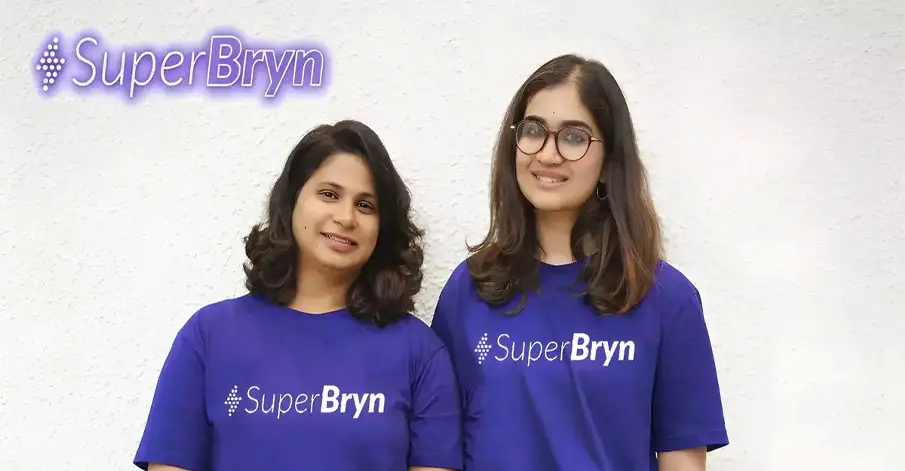
SuperBryn’s co-founders, Neethu Mariam Joy and Nikkitha Shanker, describe the company’s trajectory as one shaped by continuous experimentation and hard-won insights from the field. “We pivoted almost five times. We had no idea which direction to take. We tried, we failed, we rebuilt,” Joy said, reflecting on the difficult early journey. Shanker added that most “demo ready agents collapse in real environments where accents, noise and overlap break scripted flows,” underscoring the gap between polished demos and the unpredictability of real-world user interactions.
The startup claims that its oversight and reliability layer enables companies to move from pilot to production 20 times faster and at one-tenth the cost typically required. According to SuperBryn, clients have already achieved significant performance gains, with resolution rates rising from below 40% to over 80% within 60 days of implementation. The team argues that more than 70% of voice AI pilots fail due to the absence of systems that can monitor, diagnose and adapt voice agents in dynamic environments—a problem their platform is specifically designed to solve.
With voice AI adoption accelerating across sectors such as customer support, logistics, healthcare and financial services, the founders believe SuperBryn sits at the center of a massive reliability challenge that has limited real-world deployment. By focusing not on building voice agents themselves but on strengthening the infrastructure that keeps them operational, resilient and scalable, the company aims to become an essential layer in the voice AI stack.
The new funding will support product development, engineering expansion and market outreach as the startup doubles down on helping enterprises turn fragile voice AI pilots into stable, production-ready systems.