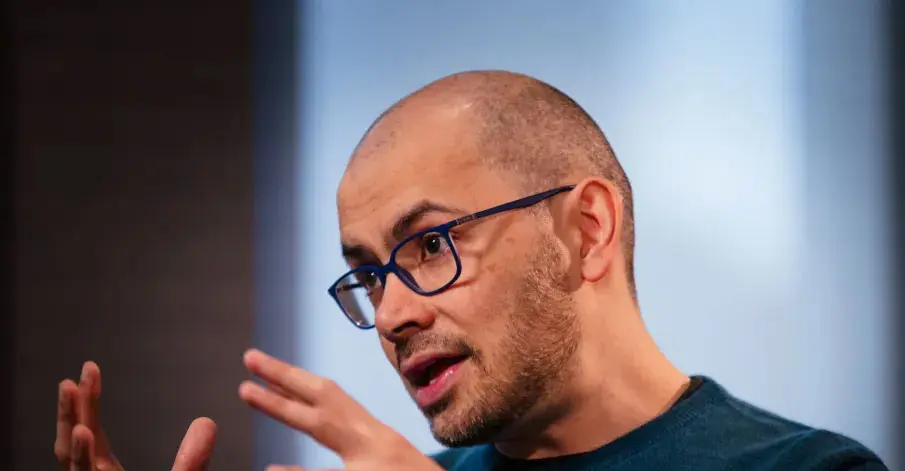
Google DeepMind CEO Demis Hassabis has raised questions over OpenAI’s decision to introduce advertising into its AI chatbot, saying he was “surprised” by how early the company has moved to monetise through ads. Speaking to Axios on the sidelines of the World Economic Forum in Davos, Hassabis said Google is exploring monetisation for AI services, but is doing so “very carefully” and without rushing into ad-driven models.
His comments follow OpenAI’s announcement that it will begin testing advertisements for users who are not on paid plans. This segment represents a substantial share of ChatGPT’s estimated 800 million weekly active users, making advertising a potentially significant revenue stream. Reflecting on the development, Hassabis said, “I’m a little bit surprised they’ve moved so early into that,” while acknowledging the historical role of advertising in building the consumer internet. “I mean, look, ads, there’s nothing wrong with ads…they funded much of the consumer internet. And if done well, they can be useful.”
Despite this, Hassabis highlighted a more fundamental challenge around trust and user expectations when AI systems function as personal assistants. He suggested that advertising could complicate the relationship between users and AI tools designed to be helpful, neutral, and reliable. “But in the realm of assistants, and if you think of the chatbot as an assistant that’s meant to be helpful…there is a question about how ads fit into that model?… You want to have trust in your assistant, so how does that work?” he said.
The remarks underline a broader debate unfolding across the AI industry as companies search for sustainable business models while maintaining user confidence. Unlike traditional search or social platforms, AI chatbots are increasingly positioned as intelligent companions that help users make decisions, solve problems, and navigate complex tasks. Introducing advertising into these interactions raises questions about transparency, bias, and the perceived independence of AI-generated responses.
Hassabis emphasised that Google is not rushing into similar territory. He reiterated that the company does not have “any current plans” to introduce ads into its AI chatbot offerings and will instead closely observe how users respond to OpenAI’s approach. For now, Google appears focused on balancing monetisation with long-term trust, signalling that the evolution of AI business models may follow a more cautious and experimental path than the rapid growth of earlier internet platforms.