


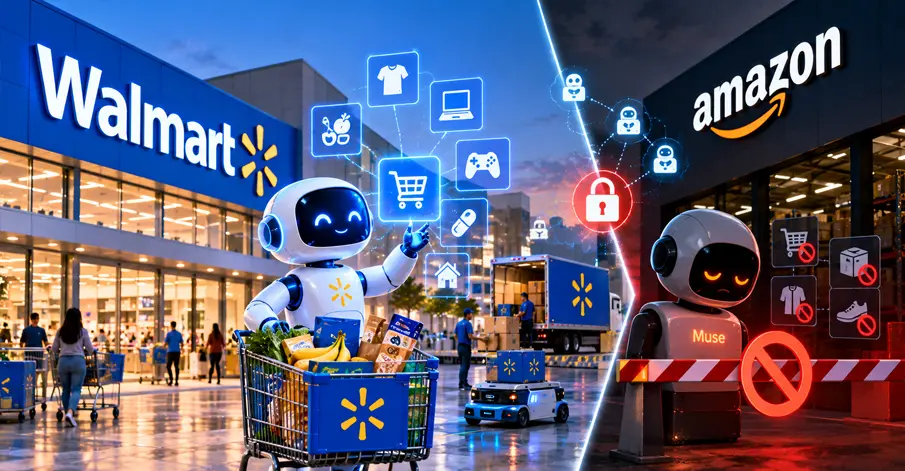
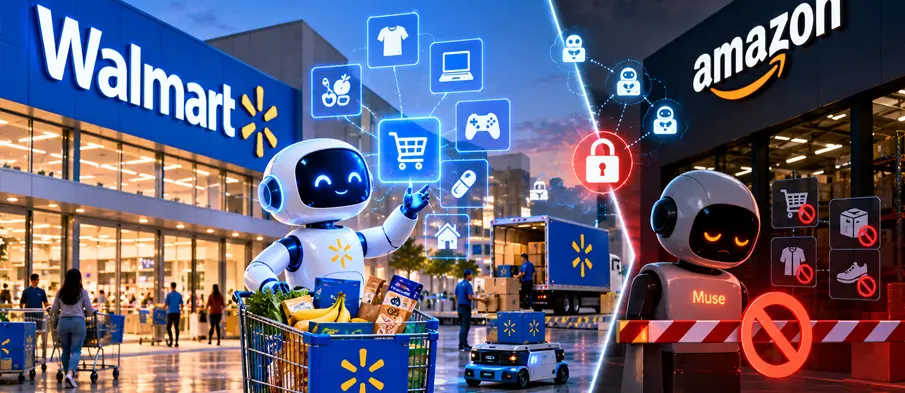
Walmart and Amazon are adopting opposing approaches to third-party AI shopping agents, creating an early strategic divide over how autonomous software should interact with ecommerce platforms and customer accounts.
Walmart plans to introduce a management system designed to let customers use outside AI agents across Walmart and Sam’s Club. Walmart Agent Gateway and Agent Profiles will allow users to determine what an agent can do, establish spending limits, require approval before completing a transaction and revoke an agent’s access.
The company was already allowing external agents to shop on its platform. The new controls are intended to create a more structured environment as AI assistants begin moving from product discovery and comparison into transaction execution.
Amazon has taken a more restrictive position. The company blocked Meta’s Muse from browsing and purchasing products on its platform less than two weeks after the agent’s launch. Amazon said it had not authorised Muse to access customer accounts, collect platform data or process transactions. It cited customer security and user experience as reasons for the decision.
Both retailers also operate their own shopping assistants. Amazon’s Alexa for Shopping provides recommendations, comparisons, price histories and automated features such as price alerts and purchasing. Walmart’s Sparky assistant recorded 60% quarter-on-quarter growth, Walmart US chief executive David Guggina said in September.
Walmart said the prices presented to an AI agent would be the same as those displayed to a human customer on Walmart.com, with relevant offers and fees disclosed before purchase. The company issued the clarification after Groundwork Collaborative chief executive Lindsay Owens alleged that Walmart was developing technology capable of varying prices based on user behaviour and demand. Walmart described those claims as inaccurate.
Consumer adoption remains limited. Only 16% of shoppers currently feel comfortable allowing an AI assistant to find and purchase products on their behalf, based on the 2026 Commerce Relevance Report. This suggests that spending controls, transaction approvals and clear mechanisms for revoking access will be central to wider adoption.
The different strategies establish two competing models for agentic commerce: an open structure supporting independently selected agents and a controlled ecosystem centred on retailer-owned assistants.