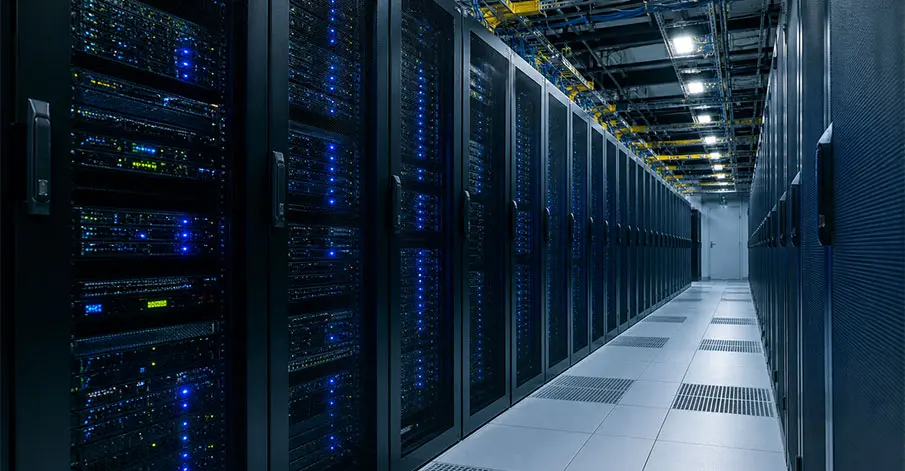
French cloud startup Antimatter has launched an ambitious plan to build a global network of AI-focused data centres, aiming to redefine how computing infrastructure is deployed in the era of artificial intelligence. The company is positioning itself as a “neocloud” provider, combining energy, hardware, and software into a single integrated platform designed specifically for AI workloads.
At the core of the strategy is a shift away from traditional centralized data centres toward distributed micro data centres. Antimatter plans to raise around €300 million (approximately $351 million) to deploy its initial network, starting with 100 modular units capable of supporting tens of thousands of GPUs. These micro facilities are designed to be deployed closer to energy sources and end users, enabling faster rollout and improved efficiency compared to conventional hyperscale data centres.
The company’s long-term vision is even more expansive, targeting the deployment of up to 1,000 distributed micro data centres globally by 2030. This network could deliver massive computing capacity for AI inference workloads, which are becoming increasingly important as AI applications scale across industries. By focusing on inference rather than just training, Antimatter is aligning with a key shift in the AI ecosystem toward real-time, large-scale deployment of models.
A defining feature of Antimatter’s model is its “energy-first” approach, where data centres are built near renewable and underutilized energy sources such as wind, solar, and hydro. This not only reduces costs but also addresses one of the biggest constraints in AI infrastructure—power availability. The company claims its approach can deliver infrastructure faster and at significantly lower cost than traditional cloud providers.
Overall, the initiative highlights a broader transformation in the AI infrastructure landscape, where speed, efficiency, and decentralization are becoming critical. As demand for AI computing continues to surge globally, Antimatter’s distributed data centre model reflects a new direction for cloud architecture, potentially reshaping how and where AI workloads are processed in the future.