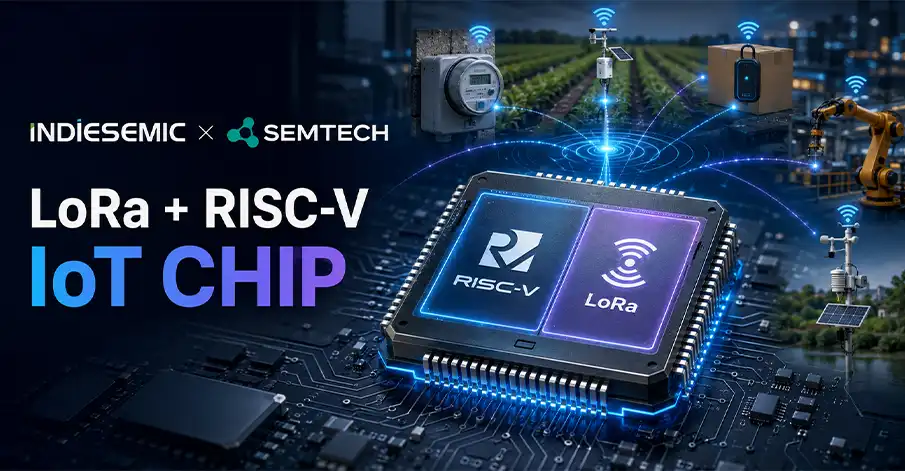

Gujarat-based fabless semiconductor startup IndieSemiC has partnered with US semiconductor supplier Semtech Corporation to develop Sabarmati-1, a 64-bit RISC-V-based system-in-package with integrated LoRa connectivity for Internet of Things applications. The collaboration was announced by the Union Ministry of Electronics and Information Technology in New Delhi in the presence of senior officials, including India Semiconductor Mission CEO Amitesh Sinha.
The Sabarmati-1 platform is being designed to combine 64-bit processing with low-power, long-range wireless communication. IndieSemiC founder Nikul Shah said the collaboration would develop the Sabarmati series of general-purpose 64-bit system-in-package platforms based on the RISC-V architecture, with Semtech’s LoRa technology integrated for connectivity. The target use cases include industrial automation, smart cities, asset tracking, smart lighting, smart metering, agriculture, logistics and healthcare.
The choice of RISC-V is significant because the open instruction set architecture has become an important route for countries and companies seeking greater flexibility in processor design. For Indian semiconductor startups, RISC-V-based platforms can lower design constraints and support domestic IP creation across application-specific chips, embedded systems and connected devices. Combining RISC-V with LoRa also targets a market where processing needs are moderate but low-power connectivity and long device life are central requirements.
The collaboration adds to Gujarat’s semiconductor design and manufacturing push. The state has been promoting the sector through its Semiconductor Policy 2022-27, the Gujarat State Electronics Mission and coordination with the India Semiconductor Mission. The state government has said Gujarat has attracted investments across the semiconductor value chain and that three semiconductor manufacturing facilities have entered commercial operations since the beginning of the year.
For India’s electronics ecosystem, the development sits at the intersection of fabless design, domestic product engineering and IoT hardware. India’s semiconductor strategy has often been associated with large fabrication and assembly investments, but fabless startups are critical to building a design-led pipeline of chips that can serve local and global markets. IoT platforms also offer a practical adoption path because they connect semiconductor design to sectors where India has large deployment needs, including agriculture, utilities, logistics and urban infrastructure.
The commercial trajectory of Sabarmati-1 will depend on performance, pricing, certification, developer support, manufacturing partnerships and the ability to attract device makers. Still, the announcement adds a concrete product-development layer to India’s semiconductor agenda. It shows how domestic startups can work with global technology suppliers while building platforms tailored to Indian and emerging-market deployment environments.