


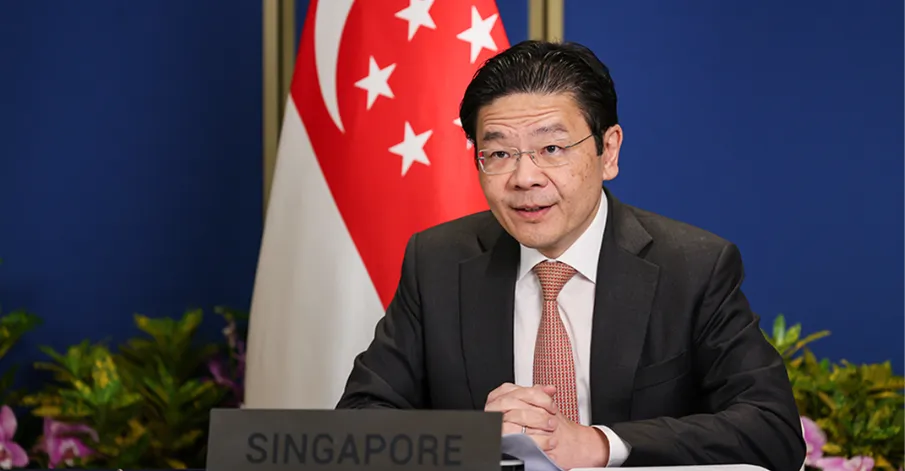
Singapore Prime Minister Lawrence Wong proposed a voluntary international pilot through which participating countries could report and exchange information about serious frontier-AI incidents and near misses. The proposal was delivered during a virtual leaders’ meeting on AI safety co-hosted by Finland and Norway.
Wong recommended beginning with practical workstreams led by smaller, cross-regional groups rather than attempting immediately to establish a large new international institution. Participation and adoption could remain voluntary, allowing governments to contribute according to their capabilities and policy priorities.
Under the proposed incident-reporting pilot, participating countries would first agree on common incident categories and the information that should be shared. They would then examine secure methods for collecting and exchanging those records while protecting legitimate commercial and national-security sensitivities. The pilot could be used to identify implementation difficulties, test what information is genuinely useful and build confidence before considering a broader framework.
The proposal covers both actual failures and near misses. Wong noted that governments, businesses and other organisations encounter unexpected behaviour when deploying frontier models even when no material harm ultimately occurs. Such cases may not meet existing mandatory-reporting thresholds, but they can still reveal risks that other users and jurisdictions need to understand.
Singapore drew a comparison with international aviation, where incidents and near misses are documented and studied to improve safety systems. The model is based on learning and prevention rather than limiting information to the developer or organisation that first experienced a problem.
The initiative would build on the Singapore Consensus on Global AI Safety Research Priorities, developed through Singapore’s International Scientific Exchange on AI Safety. Wong also pointed to the Independent International Scientific Panel on AI supporting the United Nations’ Global Dialogue on AI Governance as an existing body whose work could be connected to national efforts.
No launch date, list of pilot participants or binding reporting requirements was announced. The proposal is therefore at the coordination stage. Its immediate substance is a suggested operating model: shared definitions, controlled information exchange, voluntary participation and evidence gathered from real AI deployments.