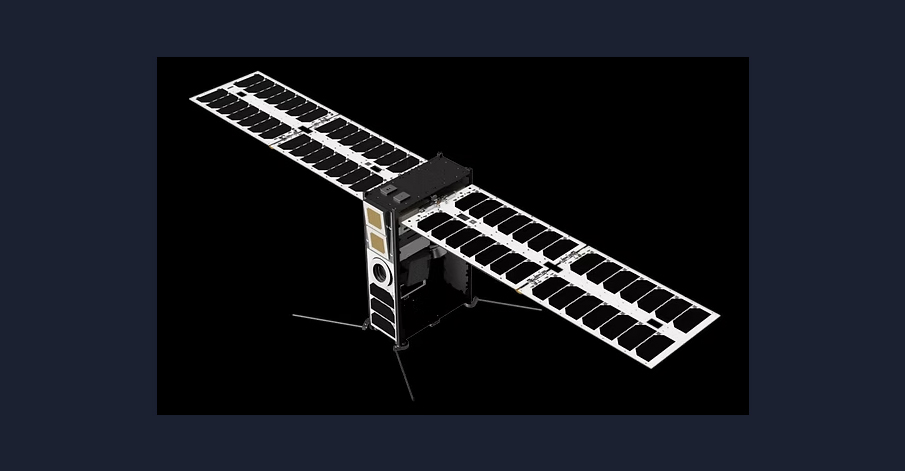
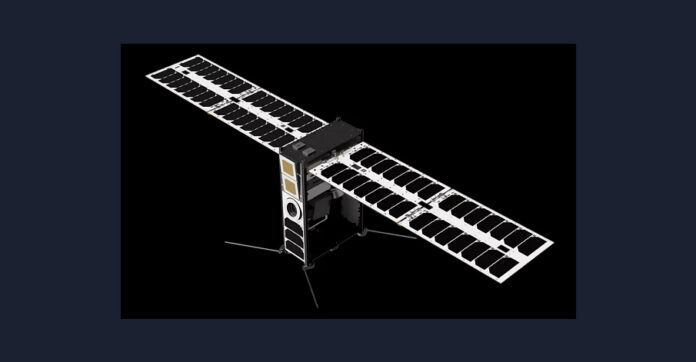
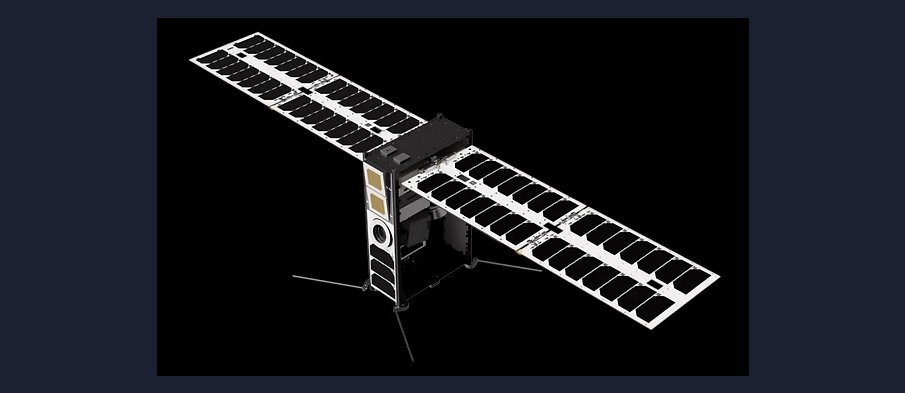
Hyderabad-based space-technology startup TakeMe2Space plans to deploy two networked computing satellites aboard a SpaceX Falcon 9 in late 2028, establishing the first data-centre-class mission in its proposed six-satellite My Orbital Infrastructure constellation.
The two 100-kilogram spacecraft are booked on the Waymaker 2 rideshare mission through a launch-services agreement with Paris-based mission-management company RIDE! space. The mission is expected to enter a sun-synchronous orbit approximately 500 kilometres above Earth. Unlike single-satellite orbital-computing demonstrations, the spacecraft are being designed to exchange data and divide computing workloads through optical inter-satellite links. The reported mission specifications include 10 Nvidia Thor processors, 100 terabytes of storage and around 1.5 kilowatts of available power on each satellite.
The initial application will be Earth-observation processing. Both spacecraft will carry multispectral imagers offering ground resolution of about one metre, while TakeMe2Space’s OrbitLab platform will process the imagery in orbit. The intended model is to extract specific information, such as flood boundaries, ship counts or crop-stress indicators, before downlinking the results. This would reduce dependence on limited ground-station contact windows and avoid transmitting large volumes of raw imagery when only a processed output is required.
The spacecraft will also test thermal management, precision attitude control and distributed computing under orbital conditions. TakeMe2Space said the pointing architecture incorporates domestically developed reaction wheels, fine sun sensors and its StarSense star tracker, which received support through IN-SPACe’s Technology Adoption Fund. The company is also using silicon solar cells instead of the gallium-arsenide cells commonly deployed on satellites, with the objective of reducing spacecraft costs.
The 2028 mission follows a mixed sequence of technical progress and setbacks. TakeMe2Space completed more than 20 experiments using its MOI-TD technology demonstrator after the satellite was launched in December 2024. Its subsequent MOI-1 satellite was lost during the PSLV-C62 launch failure in January 2026. The company is now preparing MOI-1a for an October 1 launch on SpaceX’s Transporter-18 mission, while MOI-1b is expected to fly on an ISRO Small Satellite Launch Vehicle later in 2026.
TakeMe2Space raised a $5 million seed round led by Chiratae Ventures and is pursuing a staged infrastructure plan that begins with individual orbital-computing nodes. Its longer-term roadmap calls for approximately five kilowatts of constellation-level computing capacity, followed by an orbital data-centre platform with a target capacity of 50 kilowatts. The company’s current website describes a six-satellite network intended to process Earth-observation information directly in orbit. TakeMe2Space’s published mission roadmap confirms that MOI-1a is the first planned operational node following its earlier technology demonstration.