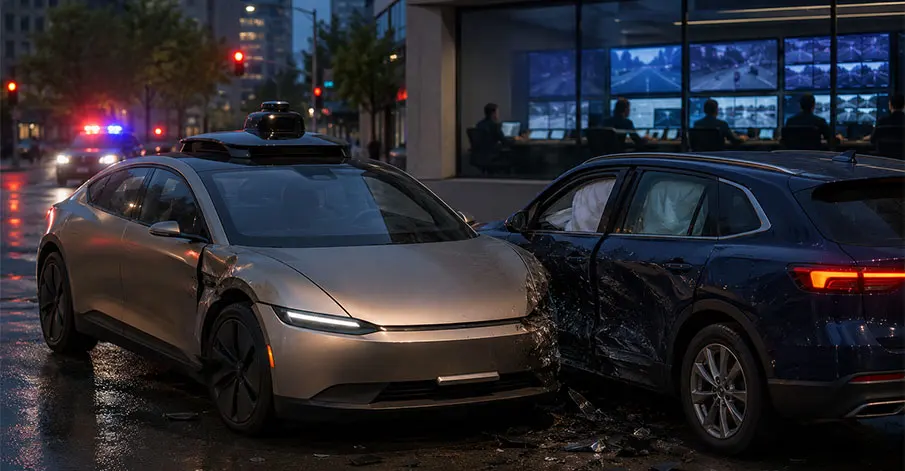
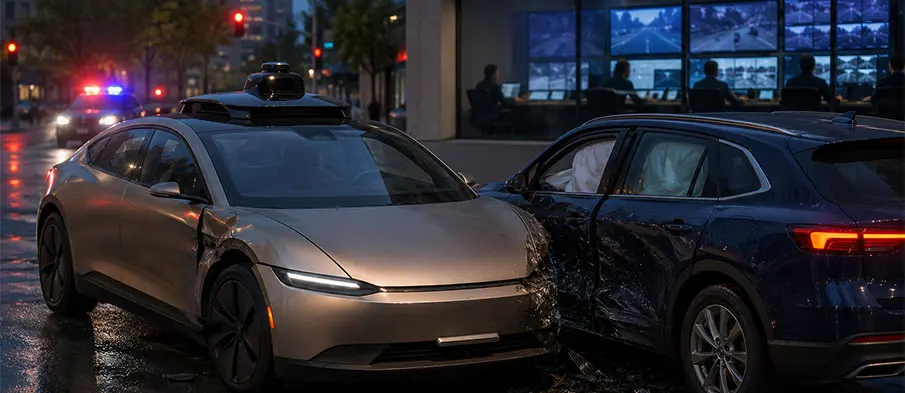
Tesla has revealed new details about two robotaxi crashes in which remote teleoperators were actively involved in controlling or assisting vehicles during incidents, shedding further light on the challenges facing the company’s autonomous driving ambitions. The disclosures emerged through newly unredacted crash reports filed with the U.S. National Highway Traffic Safety Administration (NHTSA).
According to reports, the crashes occurred in Austin, Texas, between late 2025 and early 2026 while Tesla was testing or operating its robotaxi service. In one incident, a remotely assisted vehicle reportedly struck a metal fence after a teleoperator attempted to maneuver the car when the autonomous system stalled. The crash caused minor injuries to a human safety monitor inside the vehicle. In another case, a robotaxi collided with a construction barricade during remote intervention, resulting in vehicle damage but no reported injuries.
The newly disclosed reports are significant because Tesla had previously requested regulators redact portions of its robotaxi crash data, arguing the information contained confidential business details. The latest filings provide one of the clearest indications yet that Tesla relies on remote human operators — sometimes referred to as teleoperators — to support its autonomous vehicles in difficult or ambiguous driving situations.
Industry experts note that remote assistance is not uncommon in the autonomous vehicle sector, but Tesla’s approach appears more hands-on than many competitors. Companies such as Waymo generally use remote personnel to provide guidance or suggestions rather than directly controlling vehicles during live road operations. Reuters previously reported that Waymo stated its remote assistance teams do not directly steer or drive robotaxis in normal operations.
The incidents also highlight broader technical and operational hurdles facing Tesla’s robotaxi rollout. Reports indicate the company’s service expansion into Dallas and Houston has faced issues including long wait times, inconsistent vehicle availability, navigation errors, and operational limitations. Tesla currently operates a relatively small robotaxi fleet compared to competitors such as Waymo, which has spent years gradually scaling autonomous ride-hailing operations.
Tesla’s autonomous vehicle strategy remains central to CEO Elon Musk’s long-term vision for the company. Musk has repeatedly stated that autonomous ride-hailing and self-driving technology could become Tesla’s most valuable business segment in the future. The company aims to eventually deploy millions of self-driving vehicles globally, although analysts continue questioning whether the technology is mature enough for rapid large-scale expansion.
Regulators and safety experts are paying increasing attention to how robotaxi operators manage remote intervention systems and teleoperation frameworks. Concerns include network latency, situational awareness limitations, cybersecurity risks, and whether remote operators can safely react to complex real-world driving conditions. Some lawmakers have already sought additional transparency from autonomous vehicle companies regarding their use of overseas support teams and remote driving systems.
The disclosures come as competition intensifies across the autonomous driving industry, with companies including Tesla, Waymo, Zoox, and other self-driving startups racing to commercialize robotaxi services in major U.S. cities. Industry analysts believe safety performance, regulatory trust, and operational reliability will remain critical factors determining which companies ultimately succeed in scaling autonomous transportation networks.