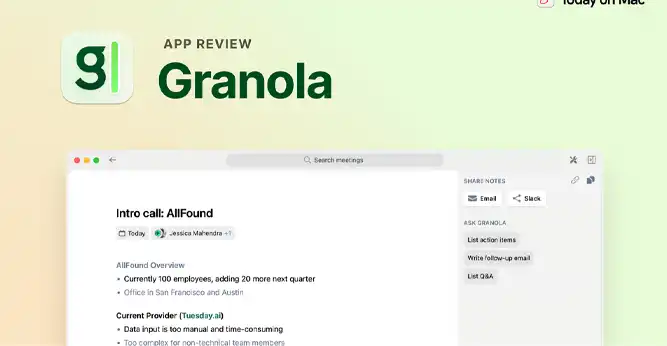
Granola, an AI-powered meeting note-taking startup, has raised $125 million in a Series C funding round, pushing its valuation to $1.5 billion and marking its entry into the unicorn club. The round was led by Index Ventures, with participation from Kleiner Perkins and existing investors including Lightspeed, Spark, and NFDG.
The funding comes less than a year after its previous round and brings Granola’s total capital raised to approximately $192 million, reflecting strong investor confidence in its rapid growth and evolving product strategy.
Initially launched as a personal AI meeting assistant that generated notes locally on users’ devices, Granola is now transitioning into a broader enterprise-focused platform. The company is building collaborative features that allow teams to share, organize, and manage meeting insights across workflows, moving beyond individual productivity to organization-wide intelligence.
As part of this shift, Granola has introduced new capabilities such as “Spaces,” which enable teams to create shared work environments with controlled access to meeting notes and knowledge repositories. The platform is also rolling out APIs for both individual users and enterprises, allowing integration with broader workflows and enabling AI agents to access and utilize meeting data at scale.
The company already serves a growing list of enterprise clients, including startups and tech companies like Vanta, Gusto, Asana, and Mistral AI. These organizations are using Granola not just for note-taking, but to extract actionable insights, automate follow-ups, and enhance decision-making processes.
Granola’s evolution reflects a broader trend in the AI ecosystem, where standalone productivity tools are rapidly expanding into full-scale enterprise platforms. As demand for AI-driven workplace automation grows, the ability to convert everyday interactions—such as meetings—into structured, actionable data is becoming a key competitive advantage.
With fresh funding and a clear enterprise focus, Granola is positioning itself as a central player in the emerging category of AI-powered workplace intelligence, competing with other tools that aim to transform how organizations capture and utilize knowledge.