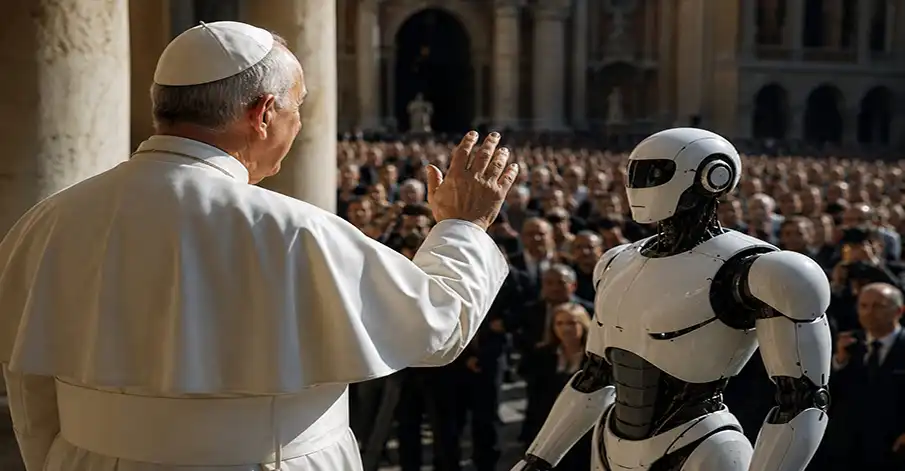

In a strong message on the future of artificial intelligence, Pope Leo XIV has urged global leaders, technology companies, and policymakers to ensure that AI remains under human control and ethical supervision. Speaking through his first major encyclical titled Magnifica Humanitas, released on May 25, the Pope warned against the unchecked expansion of AI technologies and their growing influence over society, governance, and daily human life.
The papal letter arrives at a time when artificial intelligence is advancing rapidly, with major technology firms and AI startups investing billions into research and development. As AI systems become more powerful and integrated into workplaces, education, communication, and decision-making, concerns regarding mass job displacement, misinformation, surveillance, and security threats continue to intensify worldwide.
In the encyclical, Pope Leo XIV stressed that AI must serve humanity rather than control it. He cautioned that technological innovation without ethical responsibility could weaken human dignity, freedom, and social balance. Calling for stronger global governance and accountability, the Pope emphasized the need for transparent and responsible AI development that prioritizes human welfare over profit or unchecked experimentation.
Highlighting the growing dependence on intelligent systems, the Pope also expressed concern over the concentration of technological power in the hands of a few corporations and institutions. He argued that humanity must not allow machines to shape moral judgment or replace essential human values such as compassion, wisdom, and empathy.
“AI must be disarmed before it disarms humanity,” the Pope stated, urging governments and developers to create safeguards that prevent misuse and excessive control through artificial intelligence technologies.
The statement adds to the widening international debate surrounding AI regulation and ethical innovation. In recent years, governments, researchers, and civil society groups across the world have increasingly demanded stricter oversight of advanced AI systems, especially as generative AI tools continue to evolve at an unprecedented pace.
With Magnifica Humanitas, Pope Leo XIV has positioned the Vatican among the influential global voices calling for a balanced approach to AI — one that embraces innovation while protecting human dignity, ethical responsibility, and social stability in the digital age.