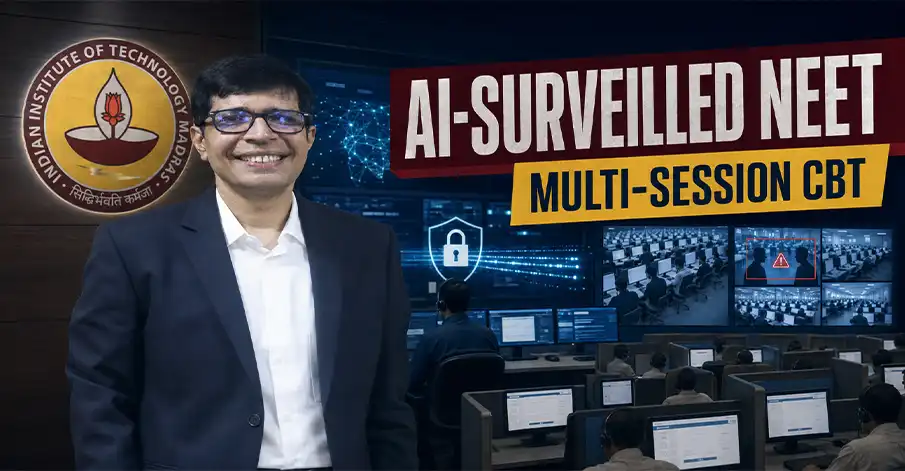
IIT Madras director V Kamakoti has said AI-powered surveillance and a multi-session computer-based format could help strengthen NEET and rebuild trust in India’s high-stakes entrance examination system.
Kamakoti is a member of the special task force set up to design a tougher examination system. The task force is headed by Infosys cofounder and former UIDAI chairman Nandan Nilekani. Kamakoti’s comments were presented as personal views, with the panel yet to meet formally.
The remarks come after the NEET 2026 paper leak, which placed renewed scrutiny on the National Testing Agency and the human processes involved in setting, securing, transporting, and administering examination papers. Kamakoti said the core issue was not simply conducting examinations at scale, but restoring trust in the people handling critical stages of the process.
He identified question-paper setters as the root of trust in any examination system and said NEET 2026 failed because of poor selection of the paper setter who eventually leaked the paper. That framing shifts the reform discussion from only logistics and technology to governance, accountability, and the design of trusted human roles within the examination lifecycle.
Kamakoti has argued that technology can support reform through AI-enabled cameras at examination centres and by conducting NEET across multiple computer-based sessions. A multi-session format could reduce dependence on a single physical paper flow and make the system more resilient against leaks, though such a model would require strong normalisation, auditability, and fairness safeguards across sessions.
AI surveillance would also need careful implementation. Examination authorities would have to define what behaviour is flagged, how false positives are handled, who reviews alerts, how video data is stored, and what rights students have in contested cases. The credibility of such a system would depend not only on deployment but also on transparent operating procedures and accountable human review.
The discussion reflects a wider shift in public-sector technology use. AI tools are increasingly being considered for fraud detection, identity verification, surveillance, and workflow assurance in large-scale citizen-facing systems. In examination reform, the central question is whether AI can reduce risk without creating opaque decision-making or excessive dependence on automated signals.
The Nilekani-led task force will have to balance technology, process redesign, legal safeguards, operational feasibility, and student trust. Kamakoti’s remarks place AI surveillance and computer-based exam architecture near the centre of that debate, but the eventual reform package will depend on the task force’s formal recommendations and the government’s implementation choices.