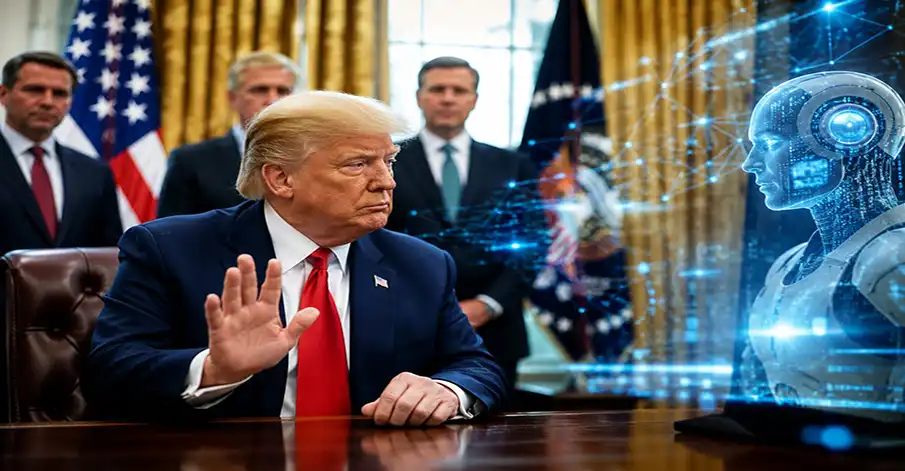

Donald Trump has postponed the signing of a planned executive order related to artificial intelligence after expressing concerns over certain sections of the document. The announcement was made on May 22 during a media interaction in the Oval Office at the White House.
The executive order was expected to be signed during a meeting involving leading technology executives and industry representatives as part of ongoing discussions surrounding artificial intelligence policy, innovation, and economic growth in the United States. However, Trump stated that the signing was delayed because he was dissatisfied with specific elements included in the text.
“Because I didn’t like certain aspects of it I postponed it,” Trump told reporters in the Oval Office.
The decision highlights the growing debate within political and technology circles over how artificial intelligence should be regulated and managed as the industry expands rapidly across multiple sectors. Governments and technology companies around the world are increasingly focusing on policies connected to AI development, data use, national security, automation, and economic impact.
While details regarding the specific provisions Trump objected to were not disclosed, the postponement indicates that discussions surrounding the final structure of the executive order are still ongoing. The proposed order is believed to focus on encouraging AI innovation while also addressing broader concerns related to infrastructure, workforce development, and the future role of artificial intelligence in the economy.
During his remarks, Trump also spoke positively about the economic impact of AI technologies and their contribution to employment opportunities. “It’s causing tremendous good, and it’s also bringing in a lot of jobs, tremendous numbers of jobs,” Trump added while discussing the growth of the artificial intelligence sector.
The delayed signing comes at a time when artificial intelligence has become a major area of competition among global technology companies and governments. Major firms continue investing heavily in AI systems, automation tools, cloud computing infrastructure, and advanced data processing technologies. Policymakers are simultaneously working to balance innovation with regulatory oversight and public concerns regarding privacy, misinformation, and labor market changes.
Industry observers believe any future executive action from the White House could play an important role in shaping the direction of AI policy in the United States, particularly as the technology becomes increasingly integrated into business operations, government systems, and everyday consumer applications.
The postponement also reflects the broader complexity of developing AI regulations that satisfy both industry leaders and political decision-makers while supporting continued technological advancement.