


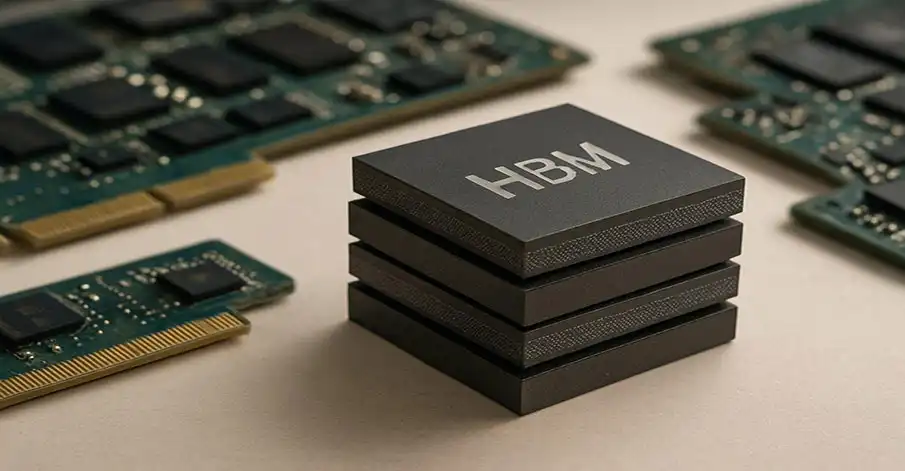
Samsung Electronics has started shipping samples of its latest high-bandwidth memory (HBM) chip, the 12-layer HBM4E, to global customers, strengthening its position in the rapidly expanding artificial intelligence semiconductor market.
The South Korean technology company announced on May 29, 2026, that the new chip delivers more than 20% faster performance compared to its earlier-generation HBM4 products. The latest development is being viewed as a major step in the global competition to supply advanced memory solutions for AI-powered data centers and next-generation computing systems.
Built using Samsung’s sixth-generation 10-nanometer-class DRAM technology and paired with a 4-nanometer foundry logic base die, the HBM4E chip has been designed to handle increasingly complex AI workloads while also improving efficiency and thermal management.
The rollout comes just three months after Samsung began supplying HBM4 chips in February 2026, reflecting the company’s accelerated push to strengthen its footprint in the premium AI memory market. By moving quickly with the upgraded HBM4E version, Samsung appears to be aiming for an early advantage over industry rivals in securing partnerships with major AI and cloud computing companies.
Investor confidence also received a boost following the announcement, with Samsung Electronics shares rising as markets reacted positively to the company’s progress in advanced memory technologies. Growing optimism surrounding Samsung’s foundry business and expanding AI opportunities further supported the rally in its stock performance.
Industry observers believe the early shipment of HBM4E samples could improve Samsung’s competitiveness in the high-end semiconductor segment, where demand for faster and more power-efficient memory chips continues to surge due to the rapid growth of AI infrastructure worldwide.
“Following the successful mass production of HBM4, Samsung has once again demonstrated its distinct technological edge with HBM4E,” said Sang Joon Hwang, Executive Vice President and Head of Memory Development at Samsung Electronics.
Samsung added that the new memory solution is specifically optimized for next-generation AI applications, including advanced servers, AI accelerators, and large-scale data centers that require significantly higher bandwidth and processing speeds.



 chip, the 12-layer HBM4E, to global customers, strengthening its position in the rapidly expanding artificial intelligence semiconductor market.)