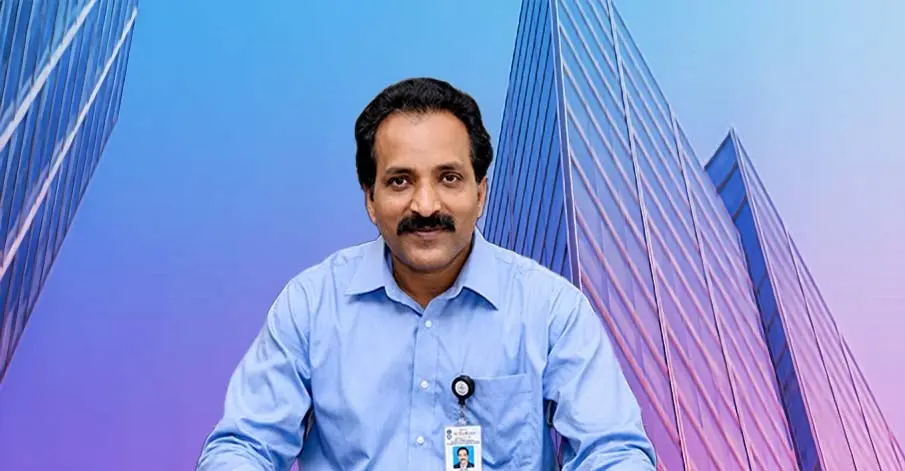
 Chennai-based space technology startup AgniKul Cosmos has appointed former Indian Space Research Organisation (ISRO) Chairman Dr. S. Somanath as an Observer on its Board of Directors, strengthening its leadership as the company prepares for its next major orbital mission.
The appointment comes at a significant juncture for AgniKul, which is gearing up for Mission 02, a flight aimed at demonstrating two key technologies that have not previously been attempted at this scale in India. The mission will seek to recover an orbital-class rocket booster after launch while also extending the operational life of the rocket’s upper stage by converting it into a functional platform in orbit. These capabilities are considered critical steps toward developing reusable launch systems and improving the economics of space transportation.
Mission 02 will use a two-stage configuration of AgniKul’s Agnibaan launch vehicle. After stage separation, the first-stage booster is expected to perform a controlled descent followed by an ocean recovery attempt. At the same time, the upper stage will demonstrate an extended on-orbit capability instead of being discarded immediately after deploying its payload. The company has secured patents in India, the United States and Europe for its convertible upper-stage architecture, which allows the same hardware used for launching satellites to function as an in-orbit asset after mission completion.
Dr. Somanath’s appointment is expected to bring decades of experience in launch vehicle development and space missions to the company’s strategic initiatives. During his tenure at ISRO, he led several landmark programmes, including LVM3, SSLV, the Reusable Launch Vehicle (RLV) programme, the Gaganyaan Test Vehicle, Chandrayaan-3 and Aditya-L1, contributing significantly to India’s space capabilities.
According to AgniKul, the timing of the appointment aligns with the rapid global shift toward reusable rocket technology. International launch providers have increasingly focused on recovering and reusing rocket stages to lower launch costs and improve operational efficiency. Through Mission 02, AgniKul aims to demonstrate India’s capabilities in this area using an indigenous launch vehicle developed by a private company.
AgniKul, incubated at IIT Madras, develops the Agnibaan family of configurable small-lift launch vehicles powered by a single-piece 3D-printed semi-cryogenic engine. The company said Mission 02 represents an important milestone in advancing India’s private space ecosystem as it works toward reusable launch technologies and expanded orbital capabilities.