


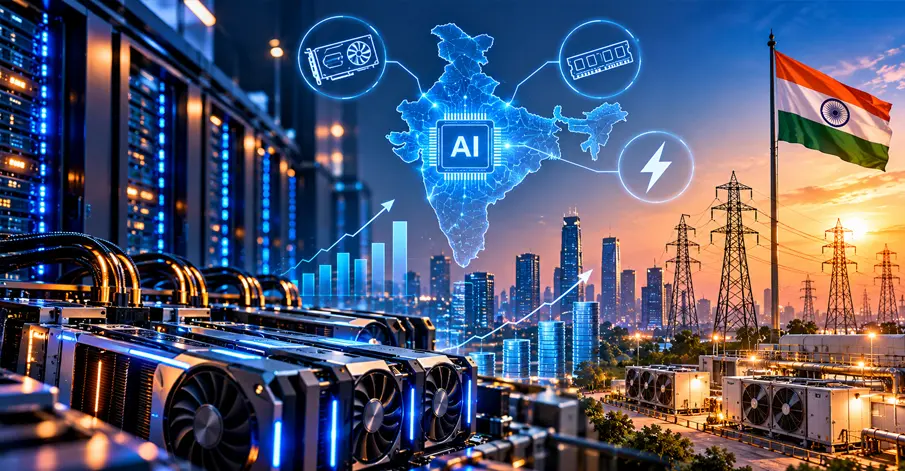
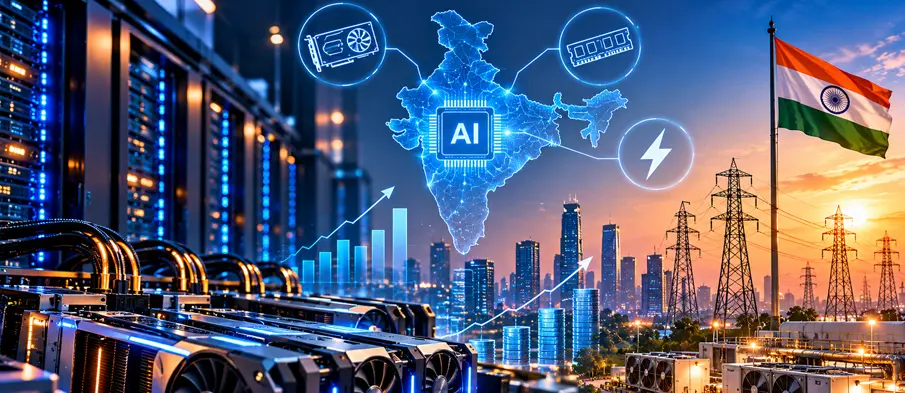
Access to computing hardware is becoming a more immediate constraint for Indian artificial-intelligence companies than access to investment capital. Startups and established technology businesses are reporting waits of three to six months for graphics processing units, while high-bandwidth memory, data-centre space and power capacity are adding further pressure to project schedules.
Cloud credits frequently cover early compute expenses for venture-backed startups, but they do not guarantee access to the required chips. Multi-year capacity commitments can improve allocation, although such arrangements require young companies to forecast demand well before their products and customer workloads have stabilised.
Juspay, the Bengaluru-headquartered payments technology company, has said that it is constrained by limited GPU availability despite having the financial capacity to invest. The company reported a ₹90-crore net loss for FY26 after recording its first annual profit of ₹62 crore a year earlier, as expenditure increased on AI infrastructure and international expansion.
The company runs approximately 95% of its AI-assisted coding workloads on open-source models hosted on infrastructure it controls. Its management estimates that renting an eight-node GPU system can cost ₹25 lakh to ₹35 lakh per month, while purchasing comparable capacity through token-based frontier-model services could cost several times more at high levels of usage.
The infrastructure decision varies by business model. Companies with predictable, sustained workloads may achieve lower unit costs through dedicated or leased systems. Application startups with uncertain demand risk locking capital into equipment that could become outdated before their products reach scale.
High-bandwidth memory has become a critical constraint behind the GPU shortage. Only SK hynix, Samsung and Micron manufacture HBM at significant scale. The component sits close to advanced processors and feeds them data at the rates required for modern AI training and inference. Major portions of 2026 production were committed before the year began.
Physical deployment creates another bottleneck. Advanced accelerators require data-centre environments capable of delivering continuous high-density power and specialised cooling. Larger hyperscalers can reserve power and space years in advance, potentially limiting the capacity available to smaller customers even after chip supply improves.
The IndiaAI Mission has assembled a public compute pool of more than 38,000 GPUs that startups and researchers can access at subsidised rates. The infrastructure is suitable for many centralised training workloads, although robotics and other real-time physical systems frequently require compute to be installed close to the machine to minimise communication delays.
The combination of procurement lead times, memory shortages and infrastructure requirements means the availability problem extends beyond the headline supply of GPUs. Indian AI companies must coordinate chips, memory, networking, power, cooling and deployment architecture, with a delay in any one layer capable of holding up an entire engineering programme.