There is something wonderfully Indian about our enterprise AI journey. We spent years debating digital transformation; with AI, we seem to have decided to skip the debate and get on with it.
AI is moving rapidly from boardroom presentations into workflows, customer interactions and increasingly autonomous agents. Pilots are becoming deployments, and the question is no longer whether to use AI, but how quickly it can be put to work.
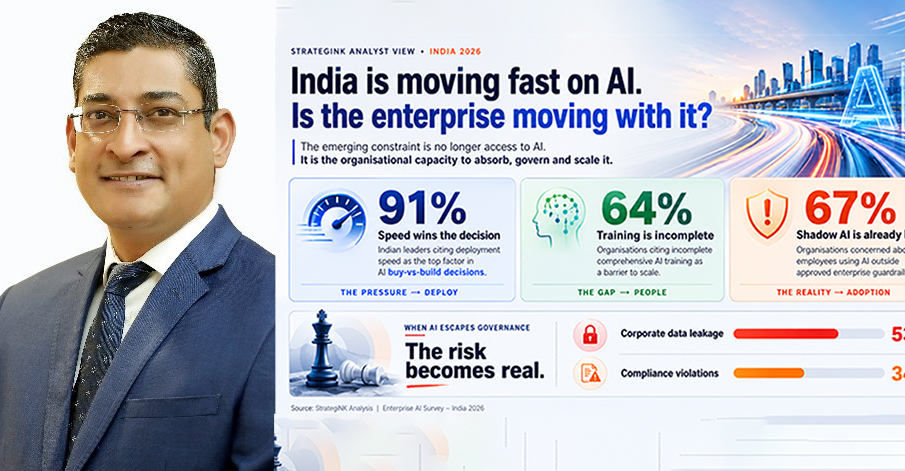
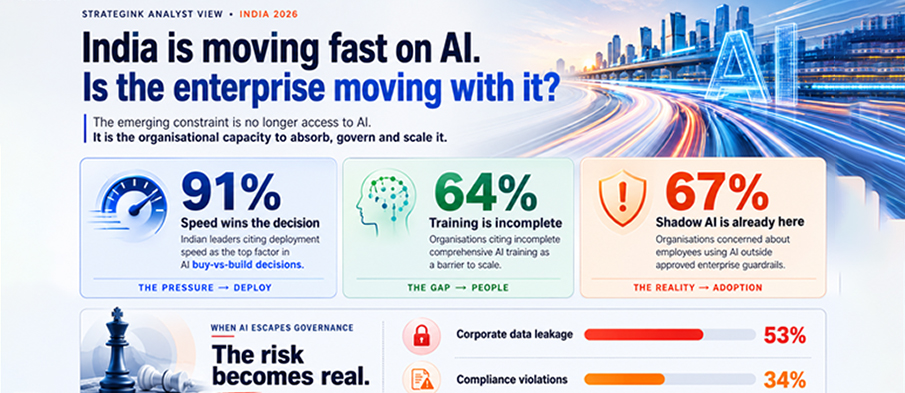
That is encouraging. It is also where things get interesting. The technology is accelerating faster than the organisation around it. Access to AI is becoming easier by the month; absorbing it into the way an enterprise actually works is proving rather more complicated.
Speed matters. But readiness matters more.
There is nothing wrong with moving quickly. Technology cycles are shortening, competitive pressure is intensifying and boards have little patience for transformation programmes that spend eighteen months proving something might work. But faster deployment does not automatically mean faster value creation. An AI agent may be technically ready in weeks; the organisation must still redesign the workflow around it, prepare employees to work alongside it, define the authority it should have and establish who remains accountable when its judgement is wrong.
The more useful CXO question is therefore shifting from “How quickly can we deploy AI?” to “How quickly can our organisation become ready for what we are deploying?”
Shadow AI is also a signal.
Shadow AI is rightly discussed as a security and governance problem: employees using unapproved tools, corporate information entering external models and AI-enabled workflows appearing beyond IT visibility. But it is also telling enterprises something useful. Employees usually reach for these tools because part of their working day is unnecessarily difficult — research takes too long, information is hard to find, presentations take hours to assemble or repetitive processes remain stubbornly repetitive.
Seen this way, Shadow AI is not only a governance problem; it is unsolicited user research. It reveals where friction exists and where employees believe AI can remove it. The answer is neither unrestricted experimentation nor blanket prohibition. Enterprises need approved environments, sensible data boundaries, human oversight and governance that makes responsible experimentation easier than circumvention.
Beyond AI literacy: Build AI work readiness.
Knowing how to prompt a model is useful, but it is not enough. Employees working alongside intelligent systems need judgement: when to trust an answer and when to challenge it; what information can safely be shared; when human judgement must override machine recommendation; and where accountability sits when human and machine decisions begin to blur. That is better described as AI work readiness — and it makes AI a CHRO, risk, business leadership and management issue as much as a CIO issue.
The real constraint is organisational absorptive capacity.
Corporate India does not lack AI ambition. The harder question is how quickly enterprises can convert rapidly evolving technological capability into sustainable business capability. At StrategINK, I increasingly think readiness comes down to four interconnected questions:
Is the technology ready? • Are the people ready? • Is the governance ready? • Is the business ready to change?
Weakness in any one eventually compromises the others. Excellent technology without workforce readiness produces under-utilisation. Enthusiastic adoption without governance creates exposure. Governance that only restricts encourages circumvention. And all of it, without genuine business redesign, risks producing the outcome that should worry CXOs most: a great deal of AI activity without very much AI value.
The race is changing.
Indian enterprises should not slow down; they should continue to experiment, deploy and learn quickly. But the source of advantage is shifting. Models will improve, platforms will become cheaper and today’s sophisticated agents will increasingly arrive as standard features. Access to powerful AI will become less remarkable.
What will remain harder to replicate is the organisation around it: employees who know how to work with intelligent systems, managers who can redesign workflows, governance that enables rather than merely restricts, and leadership focused on business outcomes rather than the number of AI projects underway.
The winners in enterprise AI will not necessarily be those who adopt it fastest. They will be the organisations that become ready for it fastest. India’s AI race, in other words, is becoming less about access to technology — and considerably more about the enterprise we build around it.