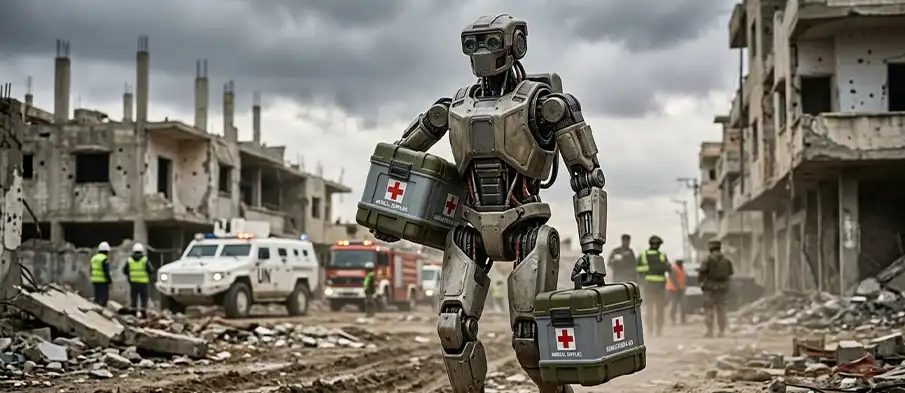
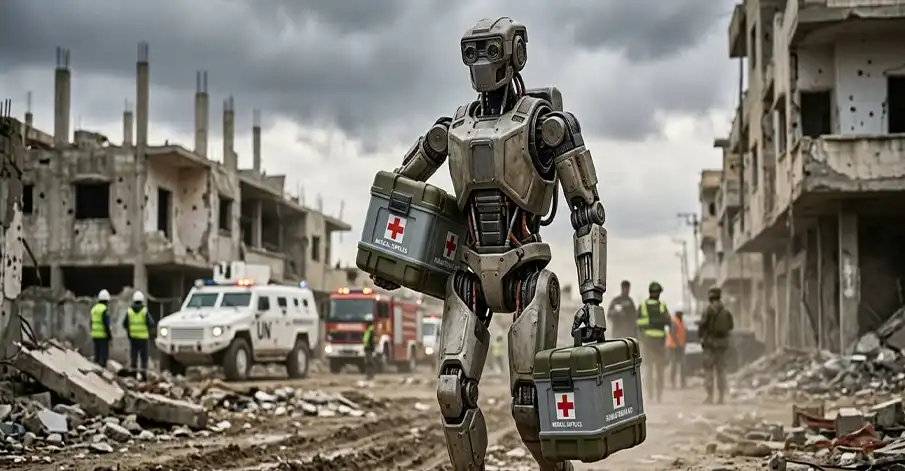
A technology startup is working toward deploying humanoid robots in Ukraine within the next 18 months, marking a significant step in the use of advanced robotics in high-risk and conflict-affected environments. The initiative reflects growing interest in leveraging autonomous and semi-autonomous systems to perform tasks that may otherwise expose humans to danger.
Foundation Future Industries is currently evaluating whether humanoid robots can effectively carry out logistics operations in hazardous areas and conflict zones. The company is focusing on determining how these machines can assist in transporting supplies, supporting field operations, and performing essential tasks in environments where safety risks remain high.
The project is part of a broader effort to expand the practical applications of humanoid robotics beyond industrial and commercial settings. While robots have already been used in manufacturing, warehousing, and inspection activities, operating in conflict-affected regions presents a far more complex challenge. Such environments require machines to navigate unpredictable terrain, adapt to changing conditions, and function reliably under demanding circumstances.
The company believes that humanoid robots could help reduce human exposure to dangerous situations by taking over specific operational responsibilities. Logistics support has emerged as one of the primary areas being explored, as supply transportation and resource movement often involve significant risks in active conflict regions.
The proposed deployment timeline of 18 months highlights the company’s ambition to move from testing and evaluation to real-world implementation. Before any operational rollout, the robots will need to demonstrate their ability to perform consistently in challenging environments while maintaining safety and efficiency standards.
The initiative also reflects the growing convergence of robotics, artificial intelligence, and autonomous systems. Advances in these technologies have accelerated the development of machines capable of carrying out increasingly sophisticated tasks with limited human intervention. As a result, organizations are exploring new ways to utilize robotic systems in sectors ranging from healthcare and disaster response to defense and logistics.
While testing remains ongoing, the project is drawing attention as an example of how emerging technologies may reshape operations in high-risk environments. The success of such efforts could influence future applications of humanoid robotics in areas where human safety concerns limit operational capabilities.