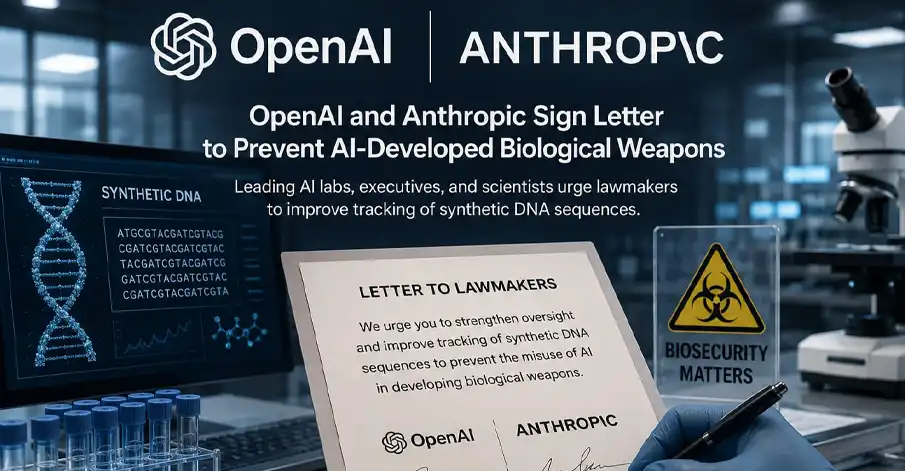
Leading artificial intelligence organizations, researchers, and technology executives have joined forces in support of stronger safeguards aimed at preventing the misuse of AI in the development of biological threats. The effort centers on improving oversight and monitoring of synthetic DNA orders to reduce the risk of advanced technologies being exploited for harmful purposes.
Among the organizations supporting the initiative are OpenAI and Anthropic, which have endorsed a letter urging lawmakers to strengthen measures governing the tracking and screening of synthetic DNA sequences. The proposal reflects growing awareness within the AI community of the potential risks that could emerge as artificial intelligence becomes increasingly capable in scientific and biological research applications.
The letter calls for enhanced monitoring systems that would help identify and track potentially dangerous synthetic DNA sequences before they can be misused. Supporters argue that stronger safeguards are necessary to ensure that advances in biotechnology and artificial intelligence continue to deliver benefits while minimizing security risks.
Artificial intelligence is playing an increasingly important role in scientific discovery, including fields such as drug development, medical research, and biological engineering. While these capabilities offer significant opportunities for innovation, experts have also highlighted the need for appropriate controls to prevent malicious actors from leveraging advanced technologies to create harmful biological agents.
The initiative brings together a broad coalition of AI developers, scientists, and industry leaders who believe that proactive action is necessary as both AI and biotechnology continue to evolve. Supporters of the proposal argue that improved DNA sequence screening can serve as a critical layer of protection against the development of AI-assisted biological weapons.
The recommended measures focus on strengthening transparency and verification processes within the synthetic biology supply chain. Enhanced screening mechanisms could help identify suspicious requests, flag potentially hazardous genetic material, and improve coordination between technology providers, researchers, and regulatory authorities.
The effort reflects a growing consensus among leading AI organizations that safety considerations must advance alongside technological innovation. As AI systems become more powerful and capable of assisting complex scientific work, industry leaders are increasingly advocating for safeguards designed to address emerging risks before they become significant threats.
The proposal also highlights the importance of collaboration between policymakers, scientific institutions, biotechnology companies, and AI developers. Supporters believe that effective oversight frameworks can help preserve the benefits of innovation while reducing the likelihood of misuse.
By advocating stronger controls on synthetic DNA monitoring, OpenAI, Anthropic, and other signatories are seeking to establish preventive measures that can help reduce biological security risks in an era of rapidly advancing artificial intelligence.